

To talk to your therapist about an ESA, describe your housing need and the symptoms your animal helps with. Then ask whether they think an ESA letter is appropriate.
Only a licensed mental health professional can write a valid letter. The clinician decides after your visits. Bring specific examples of how your animal supports your treatment. Bring any lease terms that mention pet restrictions, too. Knowing what your therapist needs makes the session easier.
This guide shows you how to prepare and what to say in your session. You’ll learn what your therapist needs to write a valid letter and what to do if they decline. It also covers questions to ask about the process and the steps to take after you receive your letter.
Talk to Your Therapist About an ESA: What the Letter Is and Why You Need One
An ESA letter is a formal document from a licensed mental health professional. It verifies your need for an emotional support animal as part of your treatment plan. The letter documents that your animal helps with a diagnosed mental health condition.
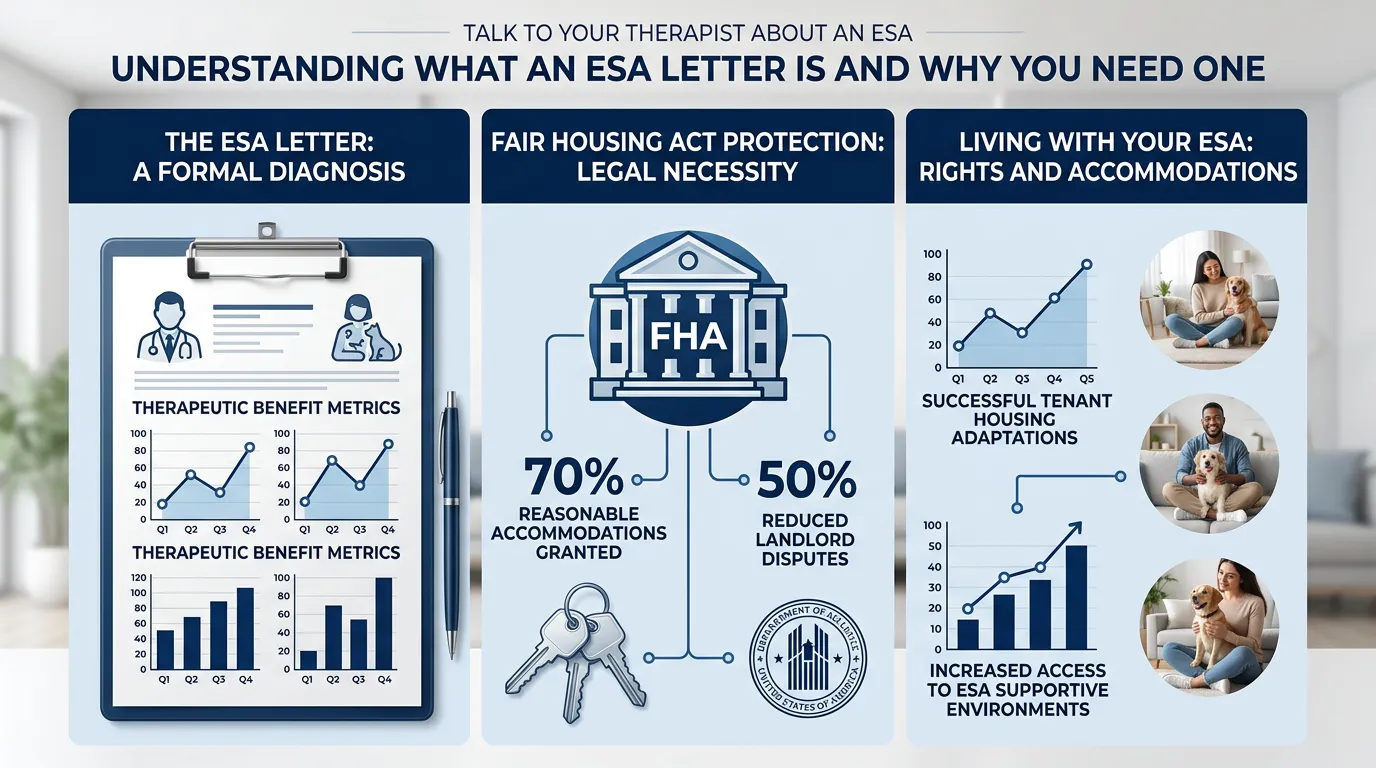
The document isn’t just a recommendation. It carries legal weight that protects your right to live with your animal.
Legal Protections Under Fair Housing Act
Under federal law, the Fair Housing Act requires landlords to make reasonable accommodations for tenants with ESAs. You can live with your animal in no-pet housing without paying pet deposits or monthly pet fees.
The protection applies even in buildings with no-pet policies or breed restrictions. Many tenants start with ESA letters for rental housing to request this accommodation in writing. Landlords cannot deny your application just because you have an ESA. You are still responsible for any damage your animal causes.
What Makes an ESA Different from a Pet
An ESA differs from a regular pet because it helps with a diagnosed mental health condition. Any pet can offer companionship. An ESA helps manage symptoms like anxiety, depression, or PTSD.

Unlike service animals, ESAs don’t require specialized training to perform specific tasks. They provide emotional support through their presence and the routine they create. For example, someone with severe depression might rely on their dog to provide structure through daily feeding and walking schedules.
Who Can Write a Valid ESA Letter
Only a licensed mental health professional in your state can write a valid ESA letter. This includes therapists, psychologists, and psychiatrists. They must hold an active license and have a real therapeutic relationship with you.
Online services that promise instant letters without a real evaluation produce invalid documents. Legitimate providers assess you before they issue a letter.
For more on requirements, read our ESA letter requirements and guidelines.
Preparing for the Conversation with Your Therapist
Come to your appointment prepared. Preparation shows you take the request seriously. It also helps your therapist make an informed decision.
Documenting How Your Pet Helps Your Mental Health
Write down specific examples of how your pet manages your symptoms. Does your dog interrupt panic attacks by nudging you? Does your cat’s purring calm you during depressive episodes?
Keep a journal for a week or two before your appointment. Note when your pet helps, such as when anxiety spikes before work or intrusive thoughts are hard to manage.
Emma & Buddy recommends writing these patterns down. Concrete examples help your therapist see how your animal supports you.
Gathering Information About Your Living Situation
Prepare to explain why you need the letter now. Are you facing eviction because of a no-pet policy? Moving to new housing? Trying to keep a pet you already have?
Your therapist needs context about whether you need an ESA housing letter for rental accommodations. They also need to know if you’re a student seeking an ESA letter for university housing. Bring any relevant housing documents or lease terms that mention pet restrictions.
Writing Down Questions and Concerns
List everything you want to ask about the process, timeline, and costs. You’ll forget half your questions once the session starts.
Write down concerns about your ability to care for a pet, doubts about qualifying, or worries about your landlord’s response. Addressing these openly helps your therapist assess whether an ESA fits your situation.
How to Start the Conversation During Your Session
Opening Statements That Work
Start by directly stating your request without lengthy preambles. Say something like: “I’d like to discuss whether an emotional support animal might be beneficial for my treatment. I’m also wondering if you’d be willing to write an ESA letter.”

This approach shows respect for your therapist’s time while clearly communicating your purpose. It also frames the conversation as a collaborative discussion rather than a demand.
Explaining Your Reasons Clearly
Share specific examples of how your pet currently helps you manage symptoms. If you have a dog that interrupts panic attacks by nudging you, describe these moments in detail. If you have a cat whose purring calms you during depressive episodes, explain that too.
Connect these examples directly to your diagnosis. If you have anxiety, explain how your pet’s presence lowers your heart rate when you feel stressed. If you have PTSD, describe how caring for your animal grounds you during flashbacks.
Be open about your living situation and why you need the letter. You may face eviction, be moving to no-pet housing, or want to keep an animal you already have. Honesty helps your therapist make an informed decision. Many people find resources for specific ESA situations helpful when preparing these explanations.
Addressing Common Therapist Concerns
If your therapist seems hesitant, ask what concerns they have. According to Psychiatry Advisor, therapists weigh clinical fit and your readiness to care for a pet.
Address these concerns directly. If they doubt you can care for an animal, outline your daily routine, budget, and support system. If they want more proof of benefit, share more examples. You can also suggest a trial period to track how the animal affects your symptoms.
What Your Therapist Needs to Know to Write an ESA Letter
Your therapist needs three main pieces of information to write a valid ESA letter. Each element helps them determine whether an emotional support animal is clinically appropriate for your situation.
Your Diagnosed Mental Health Condition
Your therapist must confirm that you have a diagnosed condition listed in the DSM-5. Examples include anxiety, depression, PTSD, and bipolar disorder. The diagnosis is the starting point for the letter.
Without a documented condition, your therapist can’t write a valid ESA letter. This isn’t about proving you’re “sick enough.” It’s about showing that you have a condition animal support could help.
How the Animal Alleviates Your Symptoms
Your therapist needs to understand how your animal helps with your condition. According to research on clinical assessment practices, this goes beyond the companionship any pet owner feels.
For example, if you have PTSD, you might explain how your dog interrupts flashbacks by nudging you. You could also describe how caring for your cat gives you a grounding routine during dissociative episodes. These specific connections show therapeutic value, not just pet ownership.
Your Ability to Care for the Animal
Your therapist will assess whether you’re capable of properly caring for an animal. Taking on a pet when you’re not ready could worsen your mental health rather than help it.
Be ready to discuss your daily routine, home, and support system. Also cover how you’ll pay for vet care and food. Your therapist may ask which other treatments you’ve tried. They may also ask why an ESA suits your treatment plan.
Questions to Ask Your Therapist About the ESA Letter Process
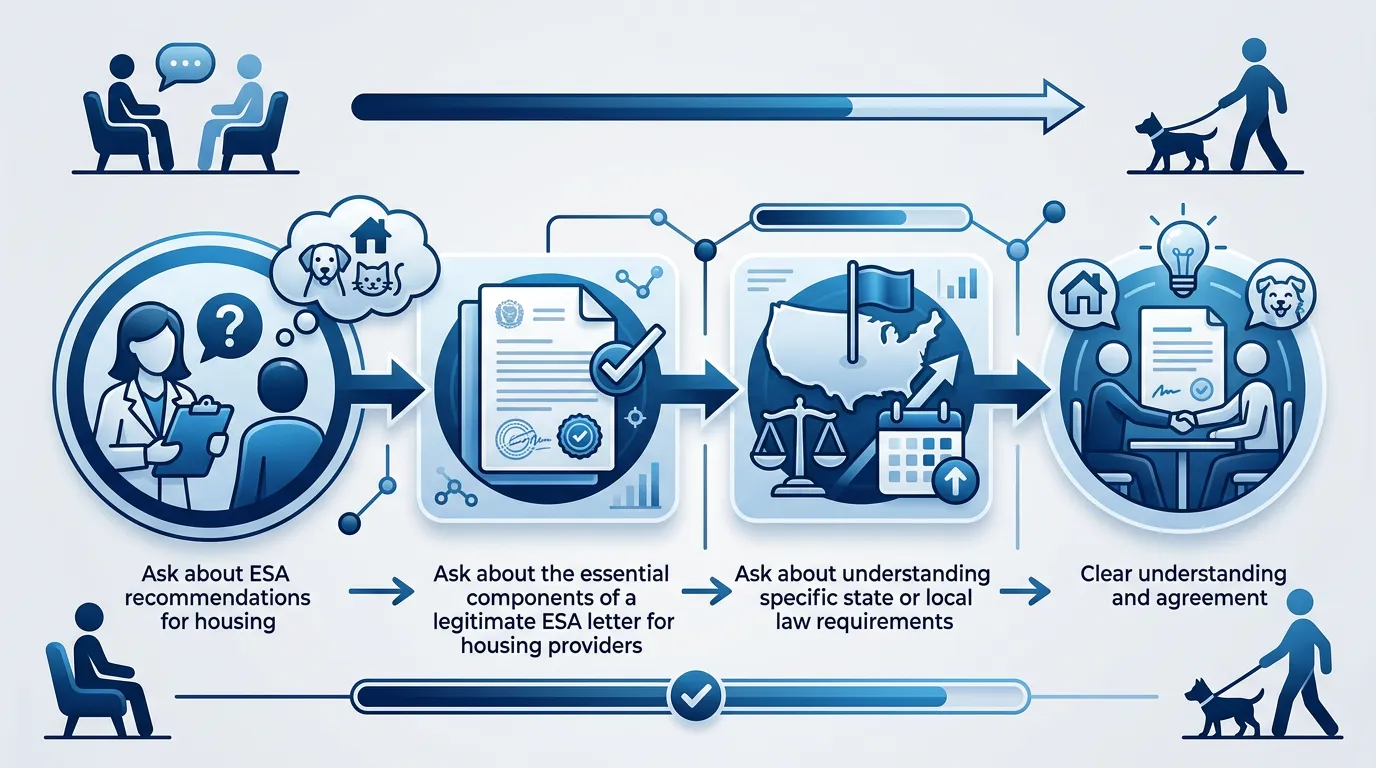
Asking the right questions helps you understand what to expect and prevents surprises later. These questions clarify the practical details of getting your letter.
Timeline and Fees
Ask how long it will take to receive the letter after your appointment. Some therapists provide it immediately, while others may take several days to draft and send it.
Inquire about any fees for writing the letter, as some therapists charge separately for this service beyond your normal session cost. Knowing the cost upfront helps you budget and avoids unexpected bills.
Letter Format and Validity
Confirm that the letter includes their license information, your diagnosis, how the ESA helps you, and their professional letterhead.

Ask how long the letter remains valid and whether you’ll need annual renewals, as some housing providers request updated letters. Most letters are valid for one year, but policies vary by property.
Follow-Up Requirements
Clarify whether you need to schedule follow-up appointments to maintain the letter’s validity or if one session is sufficient. Some therapists require ongoing treatment to support the ESA recommendation, while others only need an initial evaluation.
What to Do If Your Therapist Declines Your Request
Here is what to do if your therapist declines your request:
Understanding Why They Said No
If your therapist declines, ask for their reasons rather than accepting a simple no. They may feel they don’t know you well enough yet to make a clinical decision.
Some therapists worry about your ability to care for a pet, especially during severe symptoms. Others think an ESA doesn’t fit your situation or that you should try other treatments first.
Seeking a Second Opinion
A denial doesn’t mean you don’t qualify. Your therapist may not be comfortable writing ESA letters. They may also need more time working with you first.im
You have the right to ask another licensed mental health professional for a second opinion. That clinician can evaluate your need for an ESA on their own. This is a normal part of healthcare and doesn’t reflect poorly on you or your current therapist.
Finding an ESA-Friendly Provider
Consider a legitimate online ESA evaluation service like Emma & Buddy. Licensed therapists there conduct full evaluations for ESA letters. They have experience with ESA recommendations.
Avoid any service that promises instant letters without a real evaluation. These are scams. Landlords reject their invalid documents, and you lose money and time.
After You Receive Your ESA Letter: Next Steps
Once you have your ESA letter, submit it to your landlord or property manager right away. If you’re moving, give them the letter before you sign your lease or bring your animal home. This gives your housing provider time to process the request and helps you avoid conflicts.
Keep several copies of your letter in safe places. You’ll need it for future landlords if you move. Backups also protect you if a copy gets lost or damaged. Store one digital copy in secure cloud storage. Keep at least two paper copies in separate locations.
Understanding Your Rights and Responsibilities
Under the Fair Housing Act, your ESA letter protects you from pet fees, deposits, and breed or size restrictions. You are still responsible for any damage your animal causes to the property.
You must also keep your animal from disturbing neighbors. Excessive barking, aggressive behavior, or unsanitary conditions can lead to your ESA accommodation being revoked.
Maintaining Your ESA Relationship
Continue your regular therapy sessions. An ESA supplements your mental health treatment but doesn’t replace professional care. Your ongoing relationship with your therapist demonstrates that your need for the animal remains legitimate.
Be prepared to provide updated letters annually or when you move. Some housing providers request yearly verification to confirm your continued need for the accommodation.
Conclusion
When you talk to your therapist about an ESA, you take a proactive step toward better mental health support. The conversation works best when you bring specific examples of how an animal helps your symptoms. Learn what your therapist needs to assess, and ask clear questions about the process.
A legitimate ESA letter comes from a real therapeutic relationship. A licensed professional evaluates your condition and decides whether an animal helps your treatment.
If your therapist can’t write an ESA letter, or you don’t have a therapist yet, you still have options. Start by thinking through how an animal supports your mental health. Be ready to discuss your diagnosis and treatment history. The right professional will take time to understand your situation before making a clinical decision.
Emma & Buddy connects you with licensed mental health professionals who can evaluate your need for an ESA. They can provide a valid letter if you qualify.
Start your assessment today to get the support you need.






 Ask ChatGPT
 Ask Claude
 Ask Perplexity