


The most important rule of emotional support animal housing is that you have the right to live with your animal, even in buildings with “no pet” policies. Federal law, specifically the Fair Housing Act (FHA), requires landlords to make reasonable accommodations for individuals with disabilities. This means they must waive pet rules and cannot charge pet fees for a legitimate emotional support animal (ESA) that provides you with necessary therapeutic support, as long as you have a valid ESA letter from a licensed healthcare professional
While these protections are strong, understanding the exact requirements is the first step to securing a home for you and your companion. This guide breaks down everything you need to know, from the legal definitions and the power of the FHA to the practical steps of getting your animal approved and what landlords can and cannot legally do.
Key Takeaways:
-
The Fair Housing Act (FHA) protects your right to live with an emotional support animal (ESA) even in housing with “no pet” policies. Landlords must make reasonable accommodations and cannot charge pet fees or deposits for legitimate ESAs.
-
An ESA is legally considered an assistance animal and not a pet. Assistance animals include both service animals and emotional support animals, and both are protected under the FHA in housing situations.
-
A valid ESA letter from a licensed healthcare professional is the only document required to verify your need for an emotional support animal. Online registrations or certificates are not legally recognized.
-
Landlords must waive pet restrictions and cannot discriminate based on breed, size, or weight. They can only deny a request if the specific animal poses a proven threat, causes significant damage, or creates an undue burden.
-
Tenants have responsibilities to maintain control of their ESA, prevent property damage, and comply with local laws. If your request is denied unfairly, you can file a housing discrimination complaint with HUD’s Office of Fair Housing and Equal Opportunity.
First, What Is an Assistance Animal?

Before we dive into the specifics, let’s start with a crucial term: assistance animal. An assistance animal is not a pet. According to the Department of Housing and Urban Development (HUD), it’s an animal that provides work, performs tasks, or offers therapeutic emotional support for a person with a disability.
This broad category includes two main types: highly trained service animals and emotional support animals (ESAs). Because they are considered a necessary accommodation, not a luxury, the rules for assistance animals are completely different from the rules for pets. This is the core principle of emotional support animal housing law.
Service Animal vs. Emotional Support Animal: The Key Differences
While both are types of assistance animals, service animals and emotional support animals have distinct roles and legal protections.
-
Service Animals: A service animal, almost always a dog, is individually trained to perform specific tasks for a person with a disability. Think of a guide dog for someone who is visually impaired or a dog trained to detect the onset of a seizure. They have broad public access rights under the Americans with Disabilities Act (ADA), meaning they can go into places like restaurants and stores.
-
Emotional Support Animals (ESAs): An emotional support animal provides therapeutic benefit and comfort simply by being present. They do not need any special training to perform their function. An ESA can be any common domestic animal, like a cat, dog, rabbit, or bird. While the ADA does not grant ESAs access to public places, the Fair Housing Act (FHA) absolutely protects their role in housing.
For the purpose of emotional support animal housing, both service animals and ESAs are considered assistance animals and receive the same protections.
The Fair Housing Act: Your Strongest Protection for an ESA
The Fair Housing Act (FHA) is a federal law that prohibits discrimination in housing based on disability, race, religion, and other protected classes. For a deeper legal overview, read our guide to ESAs and PSDs under the ADA, FHA, and ACAA. A major part of this law requires housing providers to make “reasonable accommodations” for tenants with disabilities.
What does this mean for you? It means a landlord must make exceptions to their standard rules to give a person with a disability an equal opportunity to use and enjoy their home. Allowing an emotional support animal is one of the most common reasonable accommodations. In fact, complaints related to assistance animals are the most common type of disability discrimination complaint HUD receives.
Under the FHA, a landlord generally cannot:
-
Deny housing to you because you have an ESA.
-
Evict you for getting a necessary ESA.
-
Charge you pet fees or pet rent for your ESA.
These protections apply to most rental properties, including apartments, condos, and even college dorms.
The Process: How to Request an Accommodation for Your ESA
Getting your ESA approved is a formal process. You can’t just move your animal in and hope for the best. Here’s how to properly request a reasonable accommodation.
-
Make a Formal Request: Notify your landlord or housing provider that you are requesting a reasonable accommodation for your assistance animal. It is always best to do this in writing, either through a letter or an email, to create a paper trail.
-
Explain the Need: You don’t have to share your specific diagnosis, but you should state that you have a disability and that the animal provides support that alleviates one or more of its symptoms.
-
Provide Documentation: Offer to provide a legitimate ESA letter from a licensed healthcare professional to verify your request.
Once you submit your request, the landlord must consider it promptly. They are expected to engage in a good faith “interactive process” with you, meaning they should communicate openly rather than issuing a flat denial if they need more information.
What is a “No Pet” Policy Exemption?
This is the legal mechanism that allows your ESA to live with you. A no pet policy exemption is a required exception to a landlord’s rules. Because your ESA is legally considered an assistance animal and not a pet, it is exempt from any policies banning or restricting pets. This legal requirement is central to securing emotional support animal housing. Think of it like a wheelchair ramp; just as a building must allow a ramp for accessibility, it must allow a needed assistance animal.
What Landlords Are Required to Do
Housing providers have clear obligations under the FHA. When they receive a valid request for emotional support animal housing, they must waive their pet rules.
This includes:
-
Waiving Pet Fees: Landlords cannot charge a pet deposit, monthly pet rent, or any other fee for an assistance animal. However, you are still responsible for any actual damage the animal causes.
-
Ignoring Breed, Size, or Weight Restrictions: A landlord cannot deny your ESA because it’s a certain breed (like a Pit Bull) or weighs more than their pet limit (for example, 50 pounds). The FHA requires them to make an individualized assessment of your specific animal, not rely on stereotypes about its breed. An exception can only be made if your specific animal poses a direct threat, which must be based on objective evidence of its behavior.
-
Considering the Request Fairly: They cannot ask for invasive medical details or require you to use a specific form. They must accept a valid ESA letter and keep your information confidential.
If you’re worried about getting the right paperwork, it’s important to use a service that understands these legal standards. At Emma & Buddy, we can connect you with a licensed therapist in your state to ensure your ESA letter is legitimate and fully compliant with all FHA requirements.
The Only Document You Need: The ESA Letter
The only documentation a landlord can require for an ESA is a letter from a licensed healthcare professional. This is often called an “ESA letter.”
A valid ESA letter should:
-
Be written by a licensed professional (like a therapist, psychologist, or physician) who is treating you.
-
State that you have a disability as defined by the FHA (a physical or mental impairment that substantially limits one or more major life activities).
-
Confirm that the animal provides emotional support that helps with your disability.
The landlord is allowed to request this letter to verify your “disability related need” if it is not obvious. This verification simply establishes the connection between your disability and the support your animal provides.
Beware of Fake Registrations and Vests
A common point of confusion revolves around online certifications, registrations, and vests. Let’s be clear: there is no official government registry or certification for emotional support animals.
Websites that sell certificates, ID cards, or registrations for a fee are not providing legally sufficient documentation. HUD has specifically warned that these documents alone are not reliable. A landlord can, and likely will, deny a request based only on a paid certificate. Similarly, putting a vest on your animal provides no legal standing. The only thing that matters for emotional support animal housing is a legitimate letter from a healthcare provider.
When a Landlord Can Legally Deny Your Request
While your rights are strong, they aren’t absolute. A housing provider can legally deny an ESA request in a few specific situations:
-
The Animal Poses a Direct Threat: If your specific animal has a history of aggressive behavior and poses a direct threat to the health and safety of others that cannot be mitigated, it can be denied. This must be based on the animal’s actual conduct, not its breed.
-
It Would Cause Substantial Property Damage: If the animal would cause significant physical damage to the property that can’t be reasonably managed.
-
It Would Create an Undue Burden: This is a very high legal standard that is rarely met. It would have to cause an extreme financial or administrative burden on the landlord, such as causing their insurance to be cancelled after they’ve exhausted all other options.
-
The Request is for a Unique Animal: While most common domestic animals are considered reasonable, a request for an exotic animal (like a monkey or a snake) might be denied unless you can show a specific, documented need for that particular species.
What About Multiple ESAs?
Yes, it is possible to have more than one emotional support animal. The FHA does not set a limit. However, you must have a documented, disability related need for each animal. Your ESA letter should explain why each animal is necessary to help with your condition. As long as each animal is needed and well behaved, the request should be approved.
Your Responsibilities as an ESA Owner
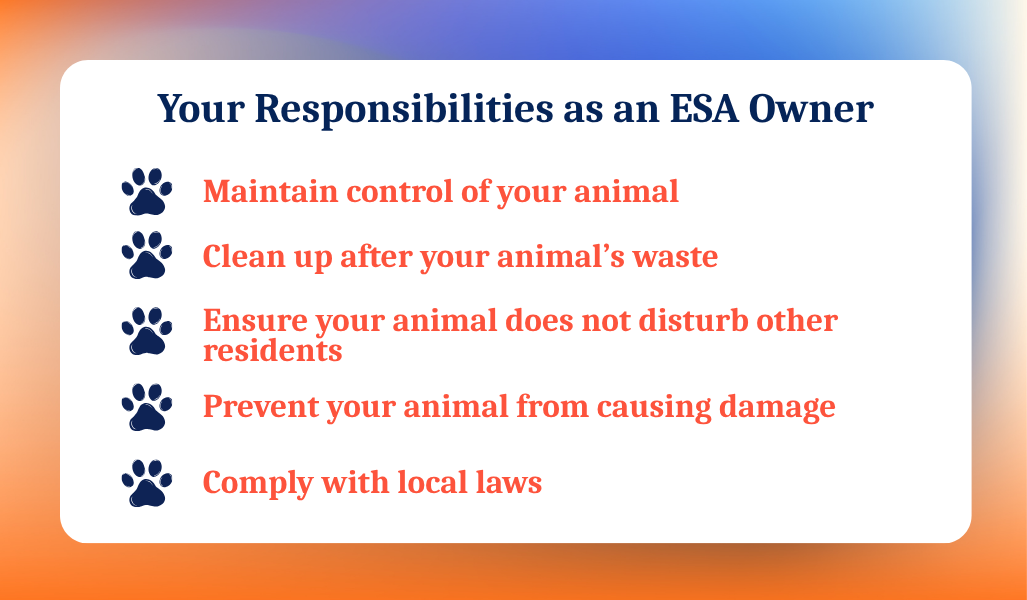
Receiving an accommodation for emotional support animal housing comes with responsibilities. You must still:
-
Maintain control of your animal at all times.
-
Clean up after your animal’s waste immediately.
-
Ensure your animal does not disturb other residents with excessive noise.
-
Prevent your animal from causing damage to the property.
-
Comply with local laws, such as leash and vaccination requirements.
Failure to meet these basic responsibilities could lead to lease violations, even with an approved ESA.
What to Do If Your ESA Request Is Denied
If you believe your landlord has unlawfully denied your request, you have recourse. You can file a housing discrimination complaint with HUD’s Office of Fair Housing and Equal Opportunity (FHEO).
This process is free and can be done online. You typically have one year from the date of the discriminatory act to file. HUD will investigate your claim and can take action against the housing provider, which may include fines and an order to approve your animal. Knowing how to secure a proper ESA letter is your first line of defense. If you need help getting started, consider a trusted service to get a legitimate ESA housing letter online.
Frequently Asked Questions About Emotional Support Animal Housing
1. Can my landlord charge me a pet deposit for my ESA?
No. Under the Fair Housing Act, an emotional support animal is not a pet. Landlords are prohibited from charging pet fees, pet deposits, or monthly pet rent for a necessary assistance animal.
2. Can my apartment complex deny my emotional support dog because it’s a “restricted breed”?
No. Breed, size, and weight restrictions do not apply to assistance animals. A landlord must make an individualized assessment based on your dog’s actual behavior, not its breed.
3. Do I need to “register” my ESA online?
No. There is no official or legally required registration for emotional support animals. The only documentation you need is a valid ESA letter from a licensed healthcare professional. Online registries and certificates hold no legal weight for emotional support animal housing.
4. When should I tell my landlord about my ESA?
You can request a reasonable accommodation at any time, whether you are applying for a lease, are about to sign one, or are already a tenant. However, it is always best to be transparent and make your request as soon as you know you’ll need it.
5. My landlord wants more information. What can they legally ask for?
If your disability is not obvious, a landlord can ask for reliable documentation (your ESA letter) that confirms you have a disability and shows the disability related need for the animal. They cannot ask about the specifics of your diagnosis or demand access to your full medical records.
6. Can I have more than one ESA in my apartment?
Yes, if you have a documented need for each animal. Your ESA letter should specify why each animal is necessary for your mental or emotional health.
Navigating the rules of emotional support animal housing is much easier when you’re armed with the right information. By understanding your rights under the FHA and obtaining the proper documentation, you can ensure you and your vital companion can live together peacefully. If you’re ready to take the next step, we at Emma & Buddy can help you get a legitimate, FHA compliant letter from a licensed professional quickly and affordably.