
Responsibilities Every Pet Owner Should Know
The responsibilities of a pet owner go far beyond filling a food bowl. You need to commit time, money, and energy every single day. Most new owners don’t realize how much work goes into proper pet care. This isn’t just about keeping an animal alive. It’s about giving them a healthy, happy life from day one until their final years.
This guide breaks down every pet owner obligation you’ll face. You’ll learn what daily pet care routines look like in practice. We cover the real cost of pet ownership, from vet bills to emergency funds. You’ll also discover pet owner legal requirements that vary by location. Training, socialization, and creating a safe home environment all get detailed attention too.
Understanding these pet care responsibilities is one of the first steps in learning how to be a responsible pet owner. You can budget your time and finances before bringing a pet home. You’ll know what to expect each day, month, and year ahead. This knowledge turns good intentions into responsible pet ownership that benefits both you and your companion.
Daily Care and Basic Needs: Core Responsibilities of a Pet Owner
Meeting your pet’s daily needs forms the foundation of responsible pet ownership. Understanding these pet owner responsibilities helps you build healthy habits that benefit both you and your pet. These pet care responsibilities reflect the daily duties of a pet owner and shape your animal’s health, happiness, and behavior. You can’t skip these basics and expect a thriving pet. Caring for a pet requires consistency, patience, and attention every single day.
Nutrition and Feeding Schedules
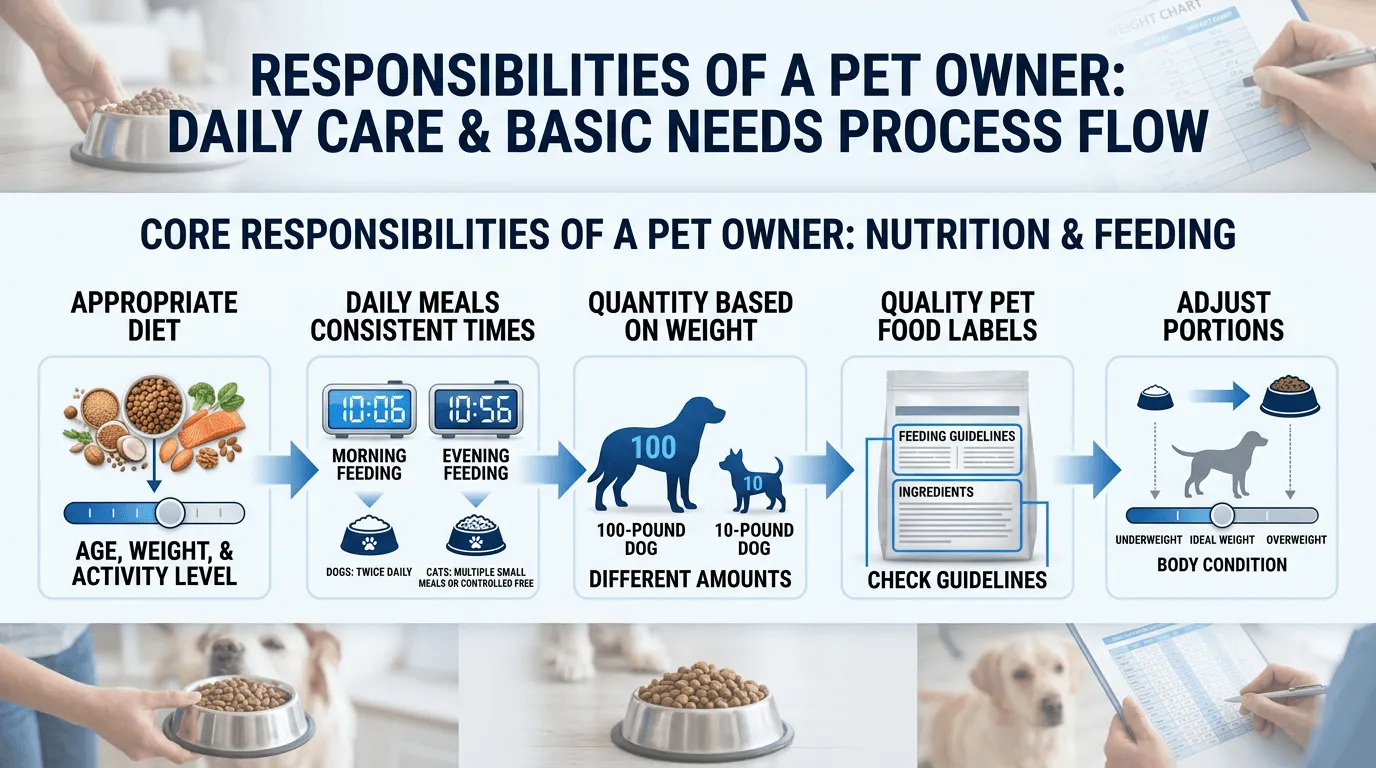
Your pet needs a species-appropriate diet matched to their age, weight, and activity level. Dogs thrive on twice-daily meals at consistent times. Cats often do better with multiple small meals or controlled free-feeding.
Portion control prevents obesity and related health problems. A 50-pound dog needs different amounts than a 10-pound dog. Check feeding guidelines on quality pet food labels. Adjust portions based on your pet’s body condition.
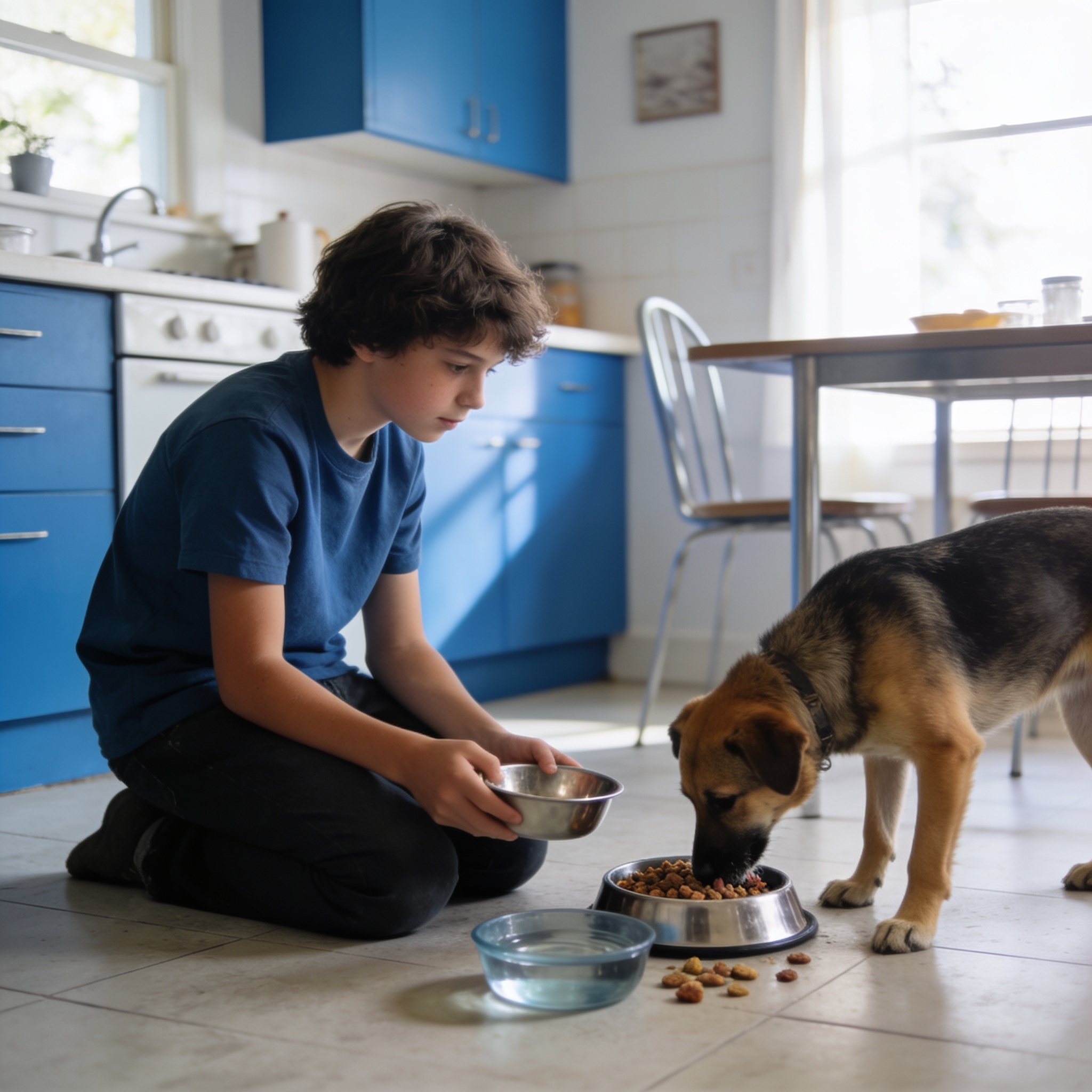
Fresh, clean water must be available at all times. Change water daily. Wash bowls regularly to prevent bacteria buildup.
Exercise and Mental Stimulation Requirements
Dogs need 30 to 120 minutes of daily exercise depending on breed and age. High-energy breeds like Border Collies need more activity than Bulldogs. Cats need interactive play sessions to stay healthy and engaged.
Mental enrichment prevents boredom and destructive behavior. Puzzle toys challenge your pet’s problem-solving skills. Training sessions build bonds and keep minds sharp. Rotate toys weekly to maintain interest.
Understanding the top 10 responsibilities every pet owner should know helps you create a complete care routine. Environmental variety matters too. New walking routes, safe outdoor time, and social interaction with other animals add richness to daily life.
Grooming and Hygiene Maintenance
Regular grooming keeps your pet comfortable and healthy. Brush your dog or cat based on coat type. Long-haired breeds need daily brushing. Short-haired pets need weekly sessions.
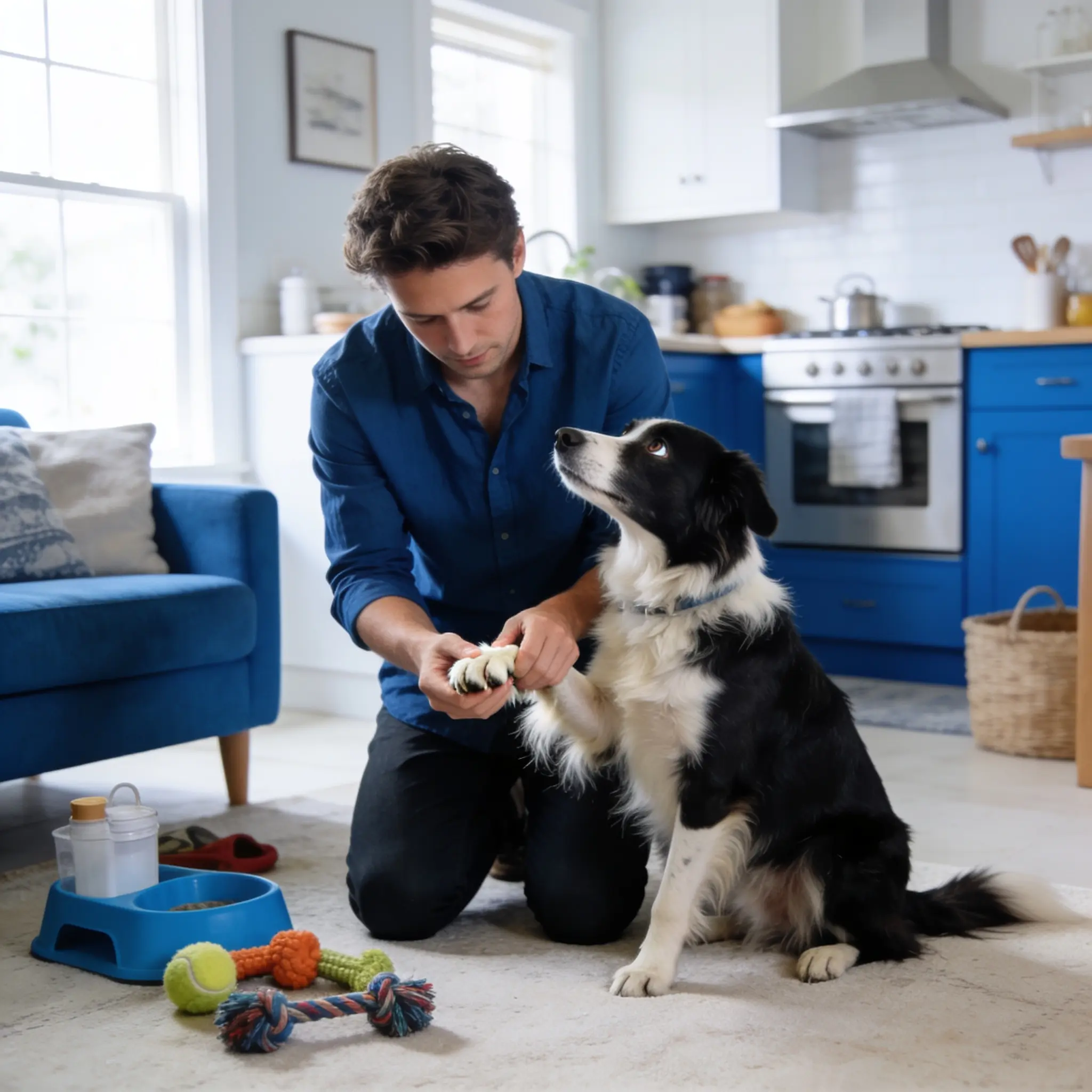
Nail trimming prevents painful overgrowth and mobility issues. Most pets need trims every 3-4 weeks. Dental care prevents gum disease and tooth loss. Brush your pet’s teeth several times weekly with pet-safe toothpaste.
Bathing frequency depends on breed and lifestyle. Most dogs need baths monthly. Cats groom themselves but may need occasional baths. Having the right grooming tools and essential products makes these tasks easier and more effective.
Clean living spaces protect your pet from parasites and illness. Wash bedding weekly. Scoop litter boxes daily. Disinfect food and water bowls regularly.
Veterinary Care and Health Management Responsibilities
Pet care responsibilities extend far beyond daily feeding and walks. Your animal’s health depends on proactive medical attention. This means regular vet visits, vaccinations, and quick action when problems arise.
Preventive Care and Vaccination Schedules
Adult pets need annual wellness exams to catch health issues early. Senior animals require bi-annual checkups because age-related conditions develop faster. These visits let your vet track weight, dental health, and organ function.
Vaccinations protect your pet from serious diseases. Core vaccines like rabies and distemper are non-negotiable. Non-core vaccines depend on your pet’s lifestyle and where you live. Dogs who visit parks need different protection than indoor cats.
Parasite prevention is a year-round commitment. Flea, tick, and heartworm medications stop infestations before they start. Dental cleanings prevent periodontal disease, which affects 80% of dogs by age three. At-home brushing between professional cleanings keeps teeth healthy.
Recognizing Signs of Illness
Watch for behavioral changes in your pet. Sudden lethargy, hiding, or aggression often signals pain or discomfort. Appetite shifts matter too. Refusing food or drinking more water than usual can indicate illness.
Physical symptoms need immediate attention. Vomiting, diarrhea, limping, or difficulty breathing are red flags. Understanding why pets bond so closely with owners helps you notice when something feels off. You know your animal’s normal behavior better than anyone.
Emergency Preparedness
Keep a pet first aid kit at home. Stock it with gauze, antiseptic, tweezers, and your vet’s contact information. Know where the nearest 24/7 emergency clinic is located. Don’t wait for a crisis to find out.
Budget for unexpected medical expenses. Emergency vet visits can cost hundreds or thousands of dollars. Pet insurance options help manage these costs. Many pet owner obligations include financial planning for health emergencies. Set aside funds monthly or explore insurance plans that fit your budget.
Financial Obligations of Pet Ownership
Understanding the cost of pet ownership helps you plan for your new companion. The responsibilities of a pet owner include financial readiness for both expected and surprise expenses. Let’s break down what you’ll spend.
Initial Setup Costs
Your first year brings the biggest bills. Adoption fees range from $50 to $500 depending on the animal and shelter. Spaying or neutering costs $200 to $500. Microchipping adds another $25 to $50.
You’ll also need supplies right away:
-
Food and water bowls ($10-$30)
-
Bed or crate ($30-$150)
-
Collar, leash, and ID tags ($20-$50)
-
Initial vaccinations ($75-$200)
-
Toys and enrichment items ($20-$100)
Total first-year setup costs typically hit $500 to $2,000. Larger dogs cost more than cats or small pets.
Ongoing Monthly Expenses
After setup, you’ll spend $50 to $200 each month. Food makes up the biggest chunk. Small pets eat $20 to $40 monthly. Large dogs can cost $80 to $150 just for quality food.
Other monthly costs include:
-
Flea and tick prevention ($10-$30)
-
Heartworm medication ($5-$15)
-
Treats and chews ($10-$25)
-
Litter for cats ($15-$30)
At Emma & Buddy, we help pet owners explore pet insurance options that fit their budget and coverage needs. Premiums run $30 to $70 monthly but can save thousands on emergency care.
Long-Term Financial Planning
Plan for $200 to $600 yearly in routine vet visits. This covers annual exams, vaccines, and dental cleanings. Set aside $1,000 to $3,000 for emergency medical situations. Accidents and illnesses happen without warning.
Over a pet’s lifetime, you’ll spend $10,000 to $30,000 depending on species and health. Dogs live 10 to 15 years. Cats often reach 15 to 20 years. Factor in boarding costs ($25-$50 daily) and grooming ($30-$90 per visit) if needed.
Training, Socialization, and Behavioral Development
Training and socialization rank among the most important responsibilities of a pet owner. These efforts shape your pet’s behavior for life. They also prevent problems that can strain your relationship.
Basic Obedience and House Training
House training requires consistency and patience. Take your pet outside frequently, especially after meals and naps. Reward them immediately when they eliminate in the right spot.
Basic commands keep your pet safe. Teach sit, stay, come, and down using positive reinforcement. Treats and praise work better than punishment. These commands help you communicate clearly with your pet.
Short training sessions work best. Aim for 5-10 minutes twice daily. Your pet stays focused and learns faster this way.
Socialization Windows and Opportunities
Puppies have a critical socialization window between 3-14 weeks old. During this time, expose them to different people, animals, and environments. This builds confidence and reduces fear later.
Adult rescue pets need gradual exposure. Start in quiet settings and slowly increase stimulation. Watch for stress signals like panting, yawning, or tucked tails. Respect your pet’s comfort boundaries.
Controlled settings matter most. Dog parks can overwhelm nervous pets. Instead, try:
-
Structured puppy classes with trained instructors
-
Calm walks in different neighborhoods
-
Supervised playdates with known friendly pets
-
Brief visits to pet-friendly stores
Understanding how dogs teach responsibility through training helps you stay committed to the process.
Addressing Problem Behaviors
Problem behaviors often signal unmet needs. Excessive barking, chewing, or aggression require investigation. Your pet might need more exercise, mental stimulation, or medical attention.
Learn your pet’s body language. Dogs show stress through whale eye, lip licking, and stiff posture. Cats flatten their ears and swish their tails. Recognizing these signs prevents escalation.
Professional help makes a difference. Certified trainers and veterinary behaviorists handle persistent issues. They create customized plans based on your pet’s specific needs. Don’t wait until problems become dangerous.
Legal Requirements and Community Responsibilities
Understanding pet owner legal requirements protects you and your community. Local laws vary by city and state. You need to know what applies where you live.
Licensing and Registration
Most cities require annual pet licenses. You’ll need proof of rabies vaccination to get one. Fees range from $10 to $50 per year.
Microchipping gives your pet permanent ID. Some areas now require it by law. The chip helps reunite lost pets with owners fast.
Keep your registration current. Late renewals often cost more. Some cities fine unlicensed pets up to $500.
Leash Laws and Public Space Regulations
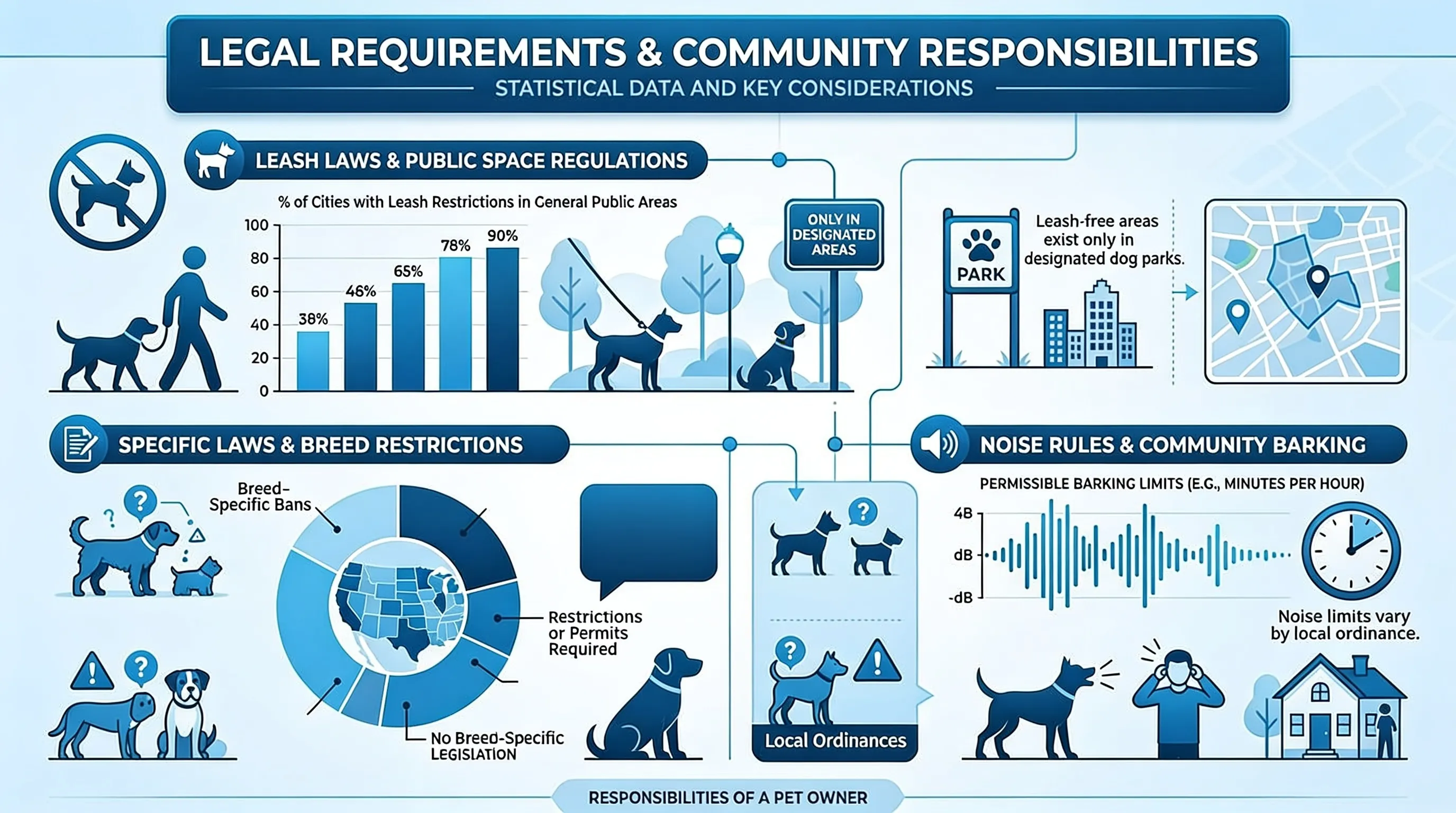
Leash laws apply in most public spaces. Your dog must stay on a leash six feet or shorter. Off-leash areas exist in designated dog parks only.
You must pick up pet waste in public. Carry bags on every walk. Fines for not cleaning up range from $50 to $500.
Noise rules cover excessive barking too. Neighbors can file complaints if your pet disturbs them. Some cities limit barking to 10 minutes per hour.
Research from the National Institutes of Health shows pet ownership costs include legal compliance expenses. Budget for licenses, fines, and liability coverage.
Some areas have breed-specific laws. These restrict or ban certain dog breeds. Check local rules before getting a pet.
You’re liable for injuries your pet causes. This includes bites and property damage. Pet insurance can help cover these costs. Housing rules may require pet deposits or restrict breeds.
Time Commitment and Lifestyle Adjustments
Pet owner obligations extend far beyond feeding and shelter. You need to dedicate at least 2-4 hours daily to your pet’s care. This includes feeding, exercise, play, and companionship. Dogs need walks and active engagement. Cats need interactive play and attention.
Daily Time Requirements
Your daily pet care routine must account for more than basic tasks. Training sessions take 15-30 minutes per day for young pets. Grooming needs vary by breed but can take 30-60 minutes weekly. Veterinary appointments add several hours per month when you factor in travel time.
Work schedules often clash with pet needs. You’ll need to arrange midday care for dogs who can’t hold their bladder for 8+ hours. Puppies and kittens need even more frequent attention. Some pet owners hire dog walkers or use daycare services. Others adjust their work hours or work from home.
Travel and Vacation Planning
According to the Canadian Veterinary Medical Association, responsible pet ownership means planning ahead for absences. You’ll need to research boarding facilities, interview pet sitters, or coordinate with trusted friends. Each option has trade-offs in cost and convenience.
Pet-friendly travel adds complexity to trips. Hotels charge extra fees. Airlines have strict carrier requirements. Road trips need frequent stops. Some owners find it easier to leave pets at home with proper care. This decision affects your vacation choices for 10-20 years depending on your pet’s lifespan.
Creating a Safe and Enriching Environment
One of the most important parts of responsible pet care is building a space where your pet can thrive. This means removing dangers and adding elements that keep them mentally engaged. A safe home prevents accidents. An enriched space prevents boredom and behavior problems.
Home Safety and Pet-Proofing
Start by scanning your home at pet eye level. Remove toxic plants like lilies, philodendrons, and sago palms. Store cleaning chemicals, medications, and human foods like chocolate and grapes in locked cabinets. Small objects that pose choking hazards should go in drawers or high shelves.
Secure trash cans with lids or place them behind closed doors. Pets can’t resist exploring garbage. That curiosity can lead to poisoning or intestinal blockages. According to Marina Village Veterinary and Integrative Care, proper pet-proofing reduces emergency vet visits by preventing common household accidents.
Temperature control matters too. Dogs and cats can’t regulate body heat like humans. Keep your home between 68-78°F. Provide species-appropriate housing with enough space to move freely. Cats need vertical territory. Dogs need secure outdoor areas with shade and water.
Environmental Enrichment
Boredom leads to destructive behavior. Rotate toys every few days to keep them interesting. Introduce novel experiences like new walking routes or puzzle feeders. These simple changes stimulate your pet’s mind and prevent anxiety.
Create safe zones where your pet can retreat when stressed. This might be a quiet room or a covered crate. Weather protection is non-negotiable. Provide shelter from extreme heat and cold. Never leave pets outside in temperatures below 45°F or above 85°F without proper protection.
Conclusion
The responsibilities of a pet owner shape every aspect of your companion’s life. From daily feeding routines to medical care, training, and legal compliance, each obligation matters. You’ve learned how to build a safe environment, manage costs, and commit the time your pet needs.
These responsibilities continue throughout your pet’s life. The best pet ownership tips are the ones you practice consistently every day. The financial planning, health monitoring, and behavioral training you provide today create a better tomorrow. Your dedication to these pet owner obligations directly affects your companion’s happiness and health.
Start by evaluating which areas need the most attention. Then create a schedule that covers daily care, vet visits, and training sessions. Track your expenses to stay within budget. Connect with other owners who understand the commitment.
Emma & Buddy provides the support you need for responsible pet ownership. Get access to ESA letters, pet insurance guidance, and trusted educational resources to help you meet every responsibility with confidence.




 Ask ChatGPT
  Ask Claude
  Ask Perplexity