
Can a Landlord Deny an ESA Letter
Do you wonder can a landlord deny an ESA letter? They might reject it for reasons unrelated to bias. Many tenants discover this only after their request gets rejected. Small details matter when a refusal is lawful. Those same details can trigger a Fair Housing Act breach. Your docs matter. Your property type matters. How you submit your request matters. These three things shape the outcome. Landlords can question if your letter is real. They can check your doctor’s credentials. They can deny your request in some cases. Most tenants don’t see these reasons coming.
This guide shows you when landlords can refuse ESA requests. You’ll learn the legal reasons they can say no. You’ll learn what information they’re allowed to request during verification. You’ll learn which demands break the law. You’ll find steps to make your case stronger. You’ll find steps to fight a denial. You’ll learn how to present your documentation to reduce the chance of rejection. You’ll also learn what to do if your landlord stalls or refuses your request outright.
Can a Landlord Deny an ESA Letter?

Not all ESA requests receive approval. When you know why denials happen, you avoid common mistakes. This helps you build a stronger case.
Documentation Quality Concerns
Property managers often reject letters that lack proper credentials or appear generic. Online services that skip video calls raise red flags. Skipping proper clinical checks also raises red flags.
Your provider’s full name must appear in the letter. Include their license number. Add the state where they hold their license. Provide their contact information. Letters missing these elements fail to meet HUD standards established in 2027.
Generic templates without personal details raise a red flag. They suggest the provider did not assess your case. Understanding what makes an ESA letter legitimate and compliant helps you avoid these documentation errors from the start.
Property-Specific Limitations
Some properties have valid reasons to deny ESA requests. Their structure or insurance rules may require this. Buildings with four or fewer units where the owner lives on-site are exempt from Fair Housing Act protections.
Insurance policies may prohibit certain animals due to liability concerns. Landlords cannot use breed rules for ESAs. They treat ESAs different from regular pets. Landlords can deny requests that need major structural changes. They can also deny requests that cause financial hardship. The hardship must go beyond what is a fair accommodation.
Animal Behavior and Safety Issues
Landlords can refuse animals with documented aggressive behavior or property damage history. Your ESA bit someone in past housing. Or it caused damage there. The owner can deny your request. They use direct threat proof.
This rule covers cases where the animal poses health or safety risks. Other residents could face harm from the animal. Past incidents give landlords legal grounds to refuse an ESA. This holds true even with a valid ESA letter.
What a Landlord Can Ask Before They Deny an ESA Letter
Landlords can check your ESA papers within the law. They must stay within legal bounds when they verify. Know these limits so you can give good answers. This helps both you and the landlord stay safe.
Permitted Verification Questions
Landlords can ask why you need an ESA. They cannot ask for your diagnosis or medical files. Landlords may ask about your bond with your provider. They may ask how long you’ve worked with them.
These questions show that you have a real bond with your provider. They prove it is not just a one-time visit. Property managers can inquire about the connection between your disability and the animal’s assistance.
Documentation Clarification Requests
Your letter may lack required parts. Landlords can ask for more papers if it does. HUD rules from 2027 spell out what must be there. Landlords may ask about the animal’s species. They may ask about its size. They may ask if it got shots required by local rules.
Property owners can ask for details about housing the animal. They can ask how you will care for it. Your letter should state if your ESA is a dog or cat. If it doesn’t, the landlord can ask you. Obtaining a legitimate ESA housing letter that includes all required elements upfront prevents these delays.
Professional Licensing Confirmation
Landlords can call your doctor to check their license. They do this to confirm the letter is real. This verification protects against fraudulent documentation and ensures your provider meets legal requirements.
Landlords can check state licensing boards. They confirm your provider holds an active license. Your state of residence is where the license applies. This process does not harm your privacy. It only checks professional credentials, not health data.
What a Landlord Cannot Demand When They Deny an ESA Letter
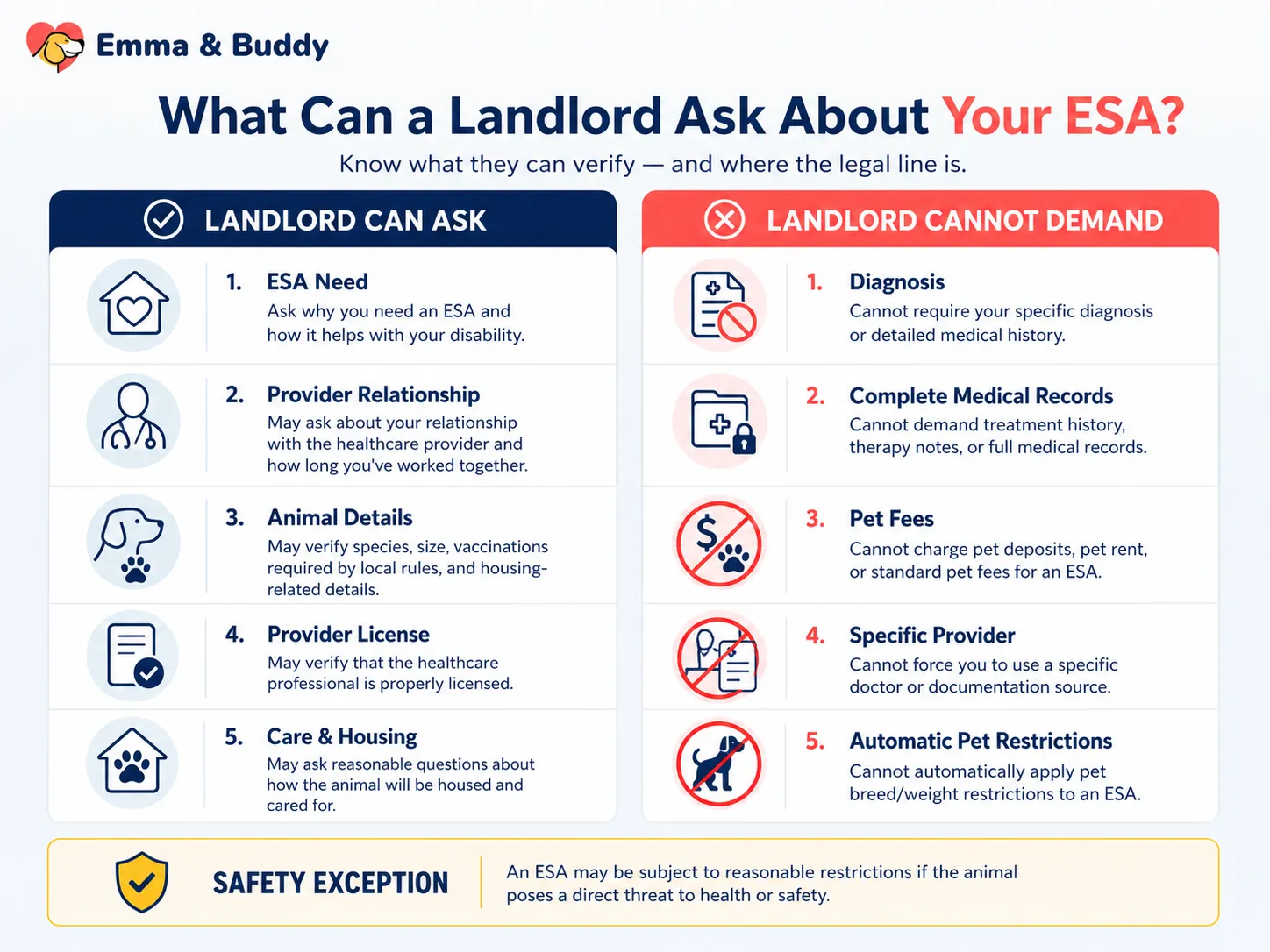
Know what landlords cannot ask for. This protects you from overreach. You stay safe during the process. Fair Housing Act protections establish clear boundaries that property owners must respect.
Prohibited Medical Information Requests
Landlords cannot require you to disclose your specific medical diagnosis. Your healthcare provider’s letter must explain the disability-related need for the ESA. But you don’t have to reveal whether you have PTSD, depression, or any other condition.
They may not demand detailed treatment history or complete medical records. HIPAA and FHA rules protect your privacy. They allow checks of the helper bond. They don’t expose your health facts.
Illegal Fee and Deposit Requirements
Landlords cannot charge pet deposits for emotional support animals. They cannot charge pet rent for them. They cannot charge extra fees for them. ESAs are reasonable accommodations, not pets subject to standard pet policies.
Emma and Buddy help tenants understand that landlords can charge for actual damages caused by an ESA. However, they cannot impose upfront fees or monthly charges that they would apply to regular pets.
Discriminatory Documentation Standards
Demanding that you use a specific healthcare provider or obtain documentation from a particular source violates your rights. You can choose any licensed professional in your state who has established a therapeutic relationship with you.
Landlords cannot impose breed or weight restrictions on ESAs that they would apply to regular pets. The only exception is when the animal poses a direct threat to health or safety. They may not require the animal to undergo specialized training or certification, as ESAs don’t need formal training like service animals do.
Setting arbitrary deadlines shorter than reasonable review periods (typically 10-14 business days) to pressure quick decisions is not permitted. This tactic often signals an attempt to deny accommodation without proper consideration.
When a Landlord Can Legally Deny an ESA Letter
Not all properties fall under Fair Housing Act protections, and not all ESA documentation meets legal standards. Understanding when landlords have valid grounds for denial helps you avoid wasted time and potential housing complications.
Property Exemptions Under Fair Housing Act
Buildings with four or fewer units where the landlord lives in one unit are completely exempt from FHA requirements. These property owners can deny ESA requests without violating federal law.
Single-family homes rented without a broker or real estate agent also fall outside Fair Housing Act coverage. The owner-occupancy exemption exists because Congress recognized that smaller landlords have different operational constraints than large property management companies.
Invalid Documentation Scenarios
Letters obtained without video consultation or proper clinical assessment fail to meet HUD standards established in 2027 guidance updates. Your provider must be licensed in the state where you reside, not just where they practice, or the documentation is considered invalid.
Generic templates without personalized assessment details that appear to come from online letter mills can be legally questioned and refused. Since ESA letter laws by state vary in their specific licensing requirements, landlords often verify provider credentials before accepting documentation.
For example, a letter from a California therapist for a tenant living in Texas would be invalid. This holds true even if the provider is legitimately licensed in California.
Direct Threat and Undue Burden Situations
If the animal has caused property damage in previous housing or has documented aggressive incidents, landlords can deny based on direct threat evidence. This requires specific documentation, not general breed assumptions.
Requests requiring structural modifications that fundamentally alter the property’s nature or create financial hardship exceeding reasonable accommodation standards also justify denial. A landlord operating on thin margins isn’t required to make modifications costing thousands of dollars to accommodate an ESA.
How to Send Your Letter So a Landlord Is Less Likely to Deny an ESA Letter
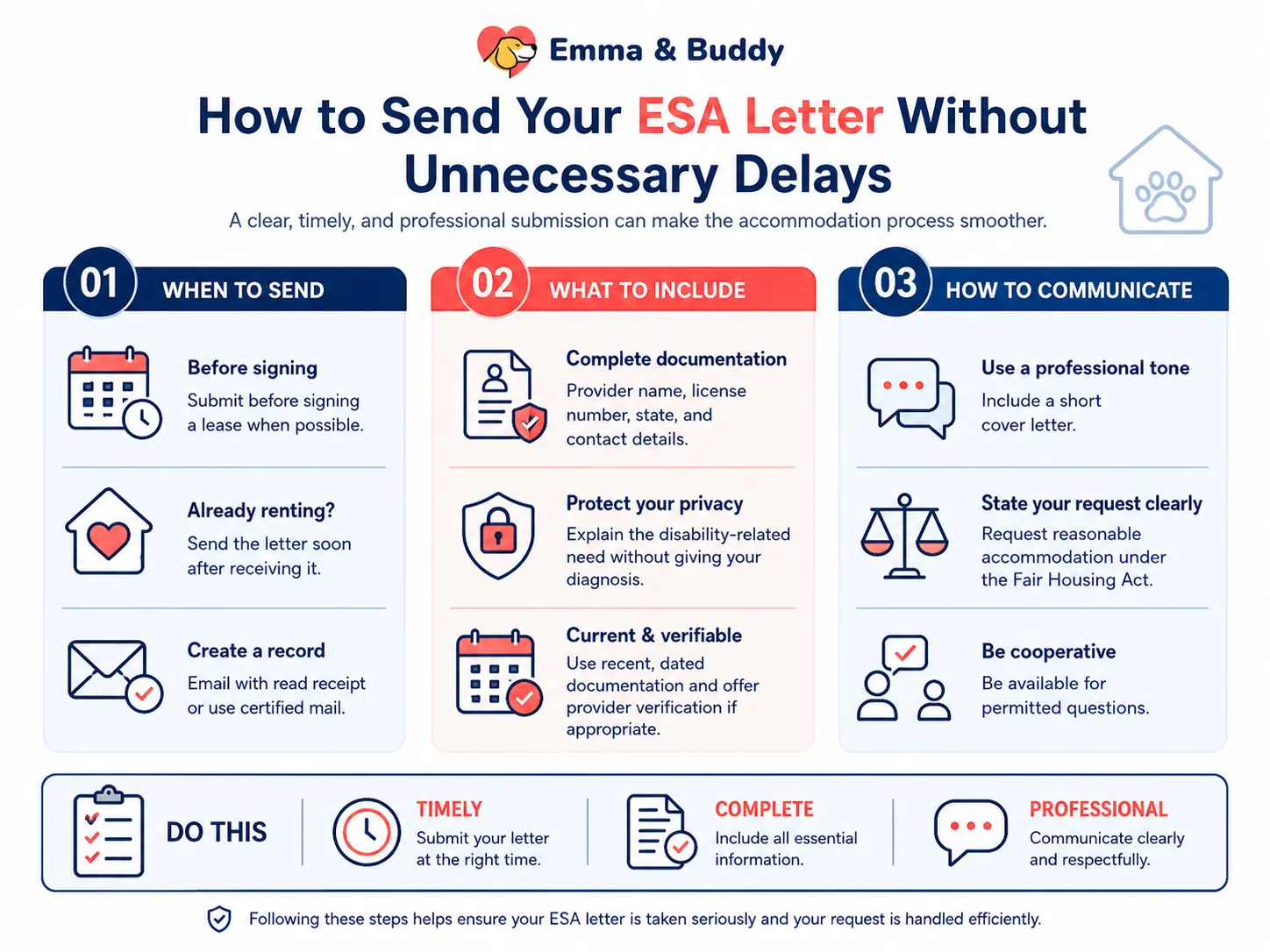
The way you present your ESA documentation matters as much as the content itself. A well-organized submission shows you understand the process and take your accommodation request seriously.
Timing Your ESA Request Strategically
Submit your ESA request before signing a lease whenever possible. This demonstrates transparency and gives landlords time to review without feeling ambushed.
If you’re already a tenant, provide the letter as soon as you obtain it. Delays can create suspicion about your intentions.
Send your request in writing using certified mail or email with read receipt. This creates a documented timeline that protects both parties and proves when the landlord received your accommodation request.
Documentation Best Practices
Include all required elements upfront to avoid back-and-forth delays. Your provider’s full name, license number, state of licensure, and contact information must appear clearly in the letter.
The letter should explain your disability-related need without revealing your specific diagnosis. Your healthcare provider must be licensed in your state of residence. They must also have an established therapeutic relationship with you over time, not from a single consultation.
Make sure the letter is dated within 2027 and reflects recent assessment. Outdated documentation from previous years raises questions about whether your need is current.
Offer to have your provider available for verification calls. This shows you’re confident in the authenticity of your documentation and willing to cooperate with reasonable verification processes.
Professional Communication Approach
Attach a brief cover letter explaining that you’re requesting a reasonable accommodation under the Fair Housing Act. State that you’re available to answer permitted questions about your request.
Keep your tone professional and factual. Avoid emotional appeals or lengthy personal stories that distract from the legal framework.
If you have questions about what landlords can and cannot ask during this process, reviewing common ESA questions and answers helps you prepare. This resource guides you through the interactive accommodation process. Understanding your rights prevents you from providing information beyond what’s legally required.
What to Do If a Landlord Stalls or Moves to Deny an ESA Letter

If your landlord delays or rejects your request, taking the right steps protects your rights and strengthens your position.
Requesting Written Explanation
Always request denial reasons in writing. Ask your landlord to provide specific citations explaining why your documentation was insufficient or what concerns remain unaddressed.
This written record becomes critical evidence if you need to file a complaint. It also clarifies whether the denial stems from legitimate concerns or potential discrimination.
If your landlord is stalling beyond reasonable review periods of 10-14 business days, send a follow-up letter requesting a decision timeline in writing. This creates accountability and documents the delay.
Filing Complaints and Seeking Legal Help
Document all communications with your landlord, including dates, methods such as email or phone, and content of interactions. This documentation supports potential complaint filing.
HUD complaints can be filed online within one year of the alleged discrimination incident through the official HUD portal. The process is straightforward and doesn’t require an attorney.
Local fair housing organizations offer free consultation and can help determine if denial was lawful or constitutes discrimination. Legal aid societies and disability rights organizations provide resources for tenants facing housing discrimination, often at no cost.
Understanding specific property exemption rules helps you assess your situation. You can determine whether your landlord’s denial falls within legal boundaries or crosses into discrimination territory.
Strengthening Your Documentation
Consider obtaining updated documentation from your healthcare provider that specifically addresses the landlord’s stated concerns if they’re legitimate. This shows good faith and may resolve genuine questions.
Engage in the interactive process by responding promptly to any reasonable requests for clarification while maintaining your rights to privacy. You don’t need to disclose your diagnosis, but you can provide additional context about your therapeutic relationship.
If your provider’s letter lacked required elements, work with them to submit a complete version. It should include all necessary credentials, license information, and explanation of your disability-related need.
Conclusion
Most situations where a landlord deny an ESA letter stem from fixable documentation problems rather than outright discrimination. Your rights under the Fair Housing Act remain strong when you have proper documentation. This means documentation from a licensed healthcare provider who has treated you and can verify a genuine therapeutic relationship. The difference between a successful accommodation and a denial often comes down to whether your letter meets current HUD standards and includes all required elements.
If you’re facing a denial, start by requesting the specific reasons in writing and reviewing whether your documentation addresses each concern. Verify that your healthcare provider is licensed in your state and that your letter includes their credentials, contact information, and a clear explanation of your disability-related need. When landlords raise legitimate questions about authenticity or completeness, updated documentation that directly addresses those concerns often resolves the issue.
For ESA letters that meet legal standards and reduce denial risk, Emma and Buddy connects you with licensed healthcare professionals who understand housing law requirements and provide thorough clinical assessments.





 Ask ChatGPT
  Ask Claude
  Ask Perplexity