
How Do Dogs Teach Responsibility? Life Lessons That Last
How do dogs teach responsibility? They do it through work you cannot postpone. A dog needs food, water, movement, and company every day. That schedule does not care if you are tired, busy, or in a bad mood. Over time, showing up for those tasks builds discipline, empathy, and follow-through.
Families often ask whether a dog will teach those skills or just add stress. Both can be true. The difference is commitment. When you take the duties of pet care seriously, dogs teach responsibility in small, repeatable ways. When nobody is in charge, the dog pays the price.
This guide looks at the research, the daily routines, the lessons dogs teach children and adults, and what to do when someone drops the ball.
Why Daily Care Builds Real Accountability
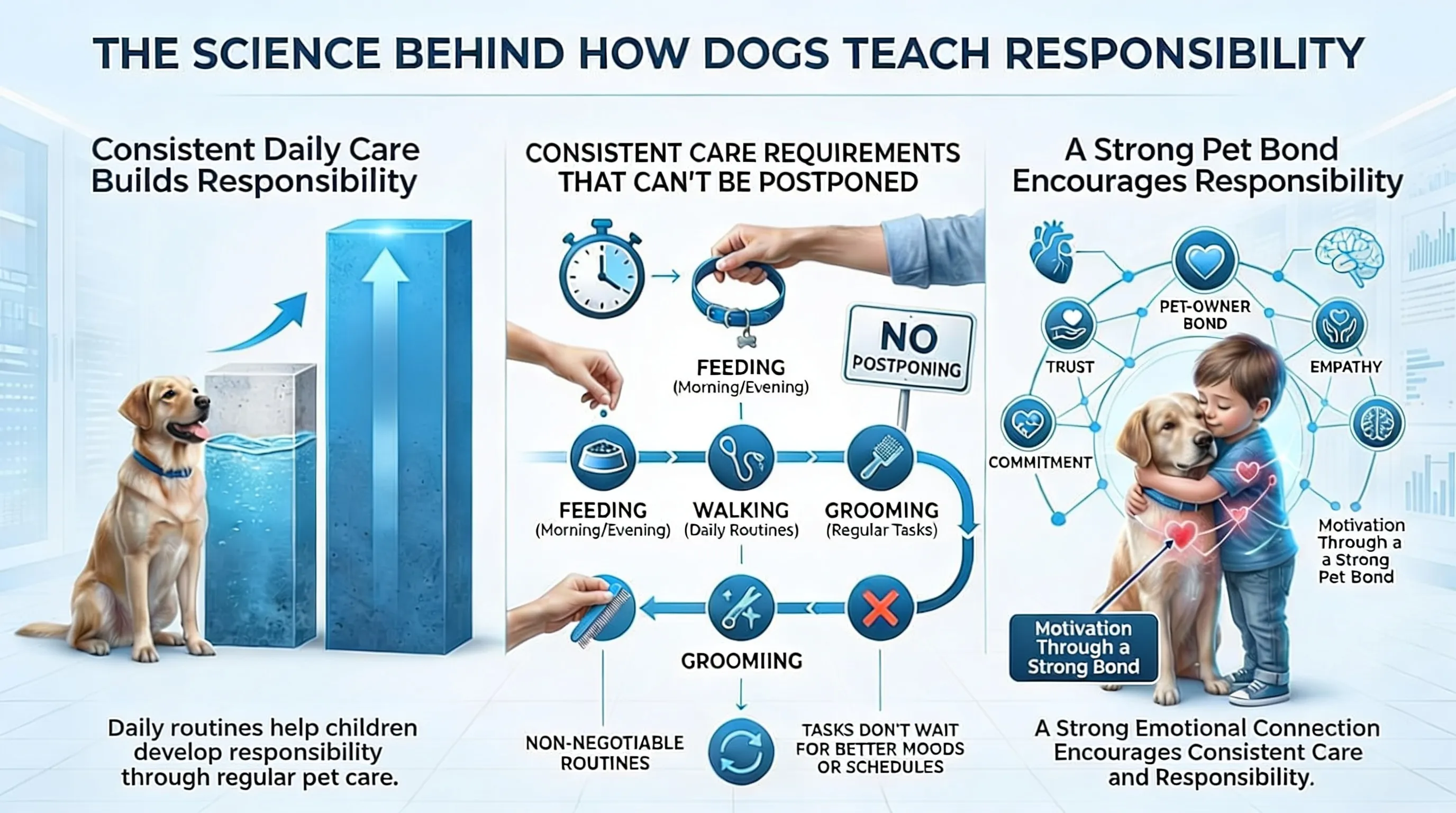
Research on pet ownership and well-being links regular care to habits of attention and commitment. You cannot “do the dog later” the way you can leave a sink of dishes. The feedback is fast and easy to see.
A schedule that does not negotiate
Morning food happens before your coffee. Water gets refreshed. Someone opens the door or clips a leash. In the evening, the walk still happens. Those are the same muscles you use for work, school, and promises to other people.
Skip a walk and you see restlessness, barking, or a mess on the floor. Forget dinner and you see clear distress. That is why learning responsibility through pets works better than a lecture. The lesson arrives the same day.
The bond makes the lesson stick
A chore chart is easy to ignore. A dog waiting by the door is not. The attachment is the teacher. You want to follow through because you care, not only because a parent said so. That is one reason what dogs teach us lasts after the puppy stage ends.
The CDC notes mental and physical health benefits tied to animal companionship, including comfort and more movement. Those gains grow when the care is consistent.
Life Lessons From Dogs
Dogs teach responsibility, and they also teach a wider set of life lessons from dogs that show up in how we treat people.
Stay in the present
A dog on a trail is not replaying yesterday. Watch the full-body focus on a ball or a new smell. You can borrow that. A walk becomes a short reset instead of another item to rush through. Many owners say this is one of the quiet emotional benefits of dogs.
Offer grace
Your dog does not grade your day. The greeting at the door is the same after a win or a mess. That kind of welcome is a model. You start giving yourself and other people a little more room.
Practice patience
Training moves at the dog’s pace. You repeat sit. You wait. You try again tomorrow. Growth takes reps. Dogs also bounce back after a startle or a bad moment. They do not hold a grudge about the thunderstorm. That resilience is worth copying.
Trust a routine
Meals, walks, and sleep at regular times help dogs feel safe. The same structure helps people. A household that keeps those promises usually keeps other promises too.
How Do Dogs Teach Responsibility at Every Age
The benefits of owning a dog change with age. The dog is the same. The job is sized to the person. A family that assigns jobs in writing, then reviews them on Sunday, usually sees fewer missed bowls than a family that says “everyone will help.”
| Age | Tasks that fit | Skills that grow |
|---|---|---|
| 3–6 years | Help fill water, hold a brush, sit with an adult at feeding | Cause and effect, gentle hands |
| 7–11 years | Feed on a schedule, simple cues, scoop the yard | Time sense, follow-through |
| 12–18 years | Walk plan, supply list, appointment reminders | Planning, money awareness |
| Adults | Full care, health choices, training | Putting someone else first |
| Seniors | Daily walks, feeding, company | Purpose, movement, routine |
The American Academy of Child and Adolescent Psychiatry notes that pets can support children when adults stay involved. That last part matters. Lessons dogs teach children only work if a grown-up is the safety net.
Children
A six-year-old who fills a water bowl sees the dog drink. That is a clean lesson. A ten-year-old who feeds at 7 a.m. and 6 p.m. learns that “later” is not a plan. Teens who track flea prevention and bag counts are practicing adult logistics.
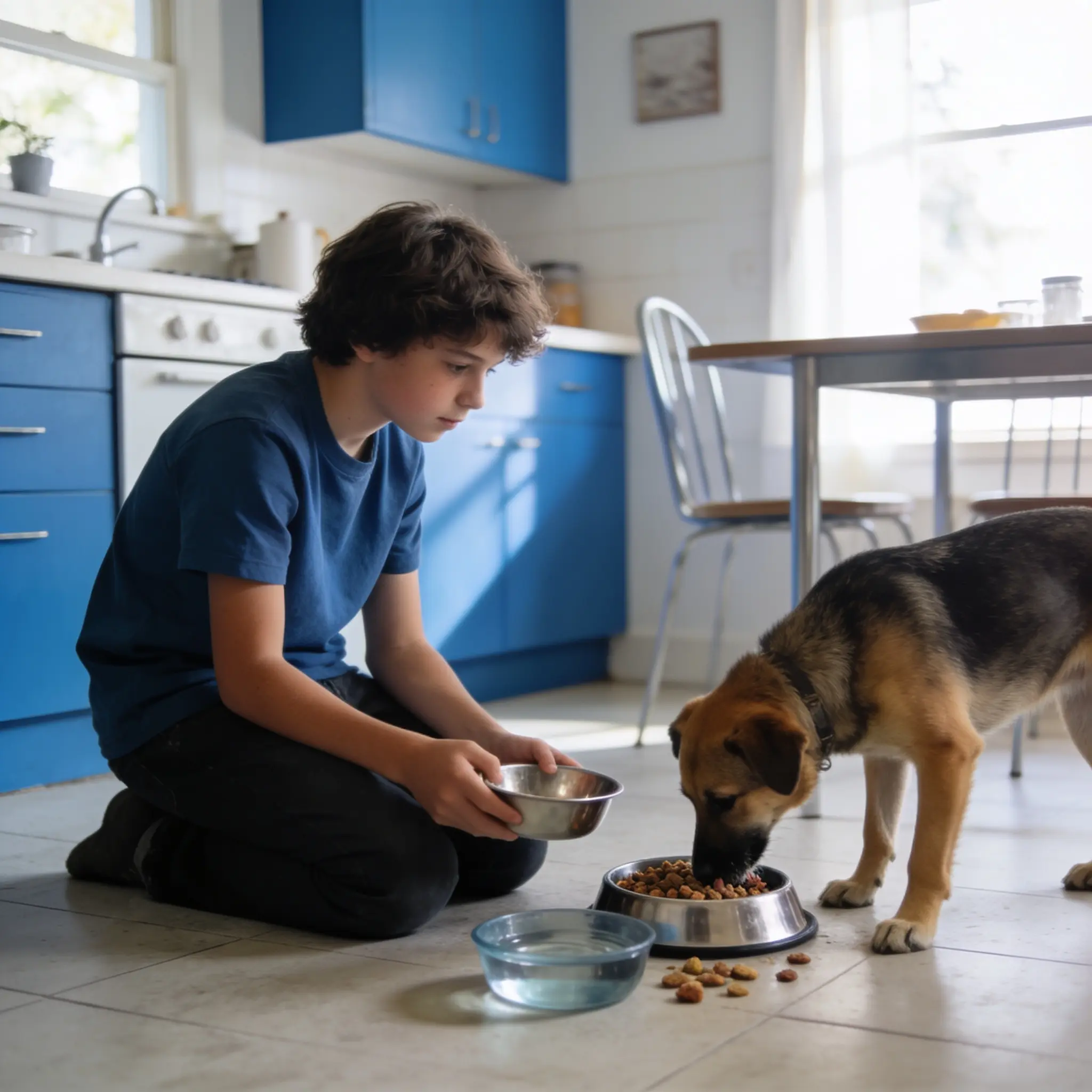
Picture a school-night scene. The dog’s bowl is empty at 6:10. The child who owns feeding is at homework. An adult can fill the bowl and still ask the child to measure tomorrow’s meal and set a phone alarm. The dog is fine. The child still has a job. That is how the lesson stays kind.
Do not hand a child the whole job. Shared care teaches. Solo care too soon teaches resentment or neglect.
Adults and first-time owners
Adults learn to leave the house when it is raining. They learn to budget for food before fun. First-time owners feel the drop after the first month, when the cute photos fade and the Tuesday night walk remains. Staying in after the excitement fades is the lesson.
Seniors
A dog can give the day a shape. Breakfast, a loop around the block, evening feeding. That rhythm is useful after retirement or loss. The responsibility of owning a dog keeps a person needed in a simple, daily way. Choose a dog whose energy matches the owner. A high-drive puppy is not a gift for every household.
Character Built in the Small Tasks
Dogs teach responsibility most clearly in the boring parts of the day.
Morning and evening
Feeding before you check your phone is a small act of order. An evening walk you do not want to take is a kept promise. Do those two things for a year and you have a different relationship with excuses.
Weather and follow-through
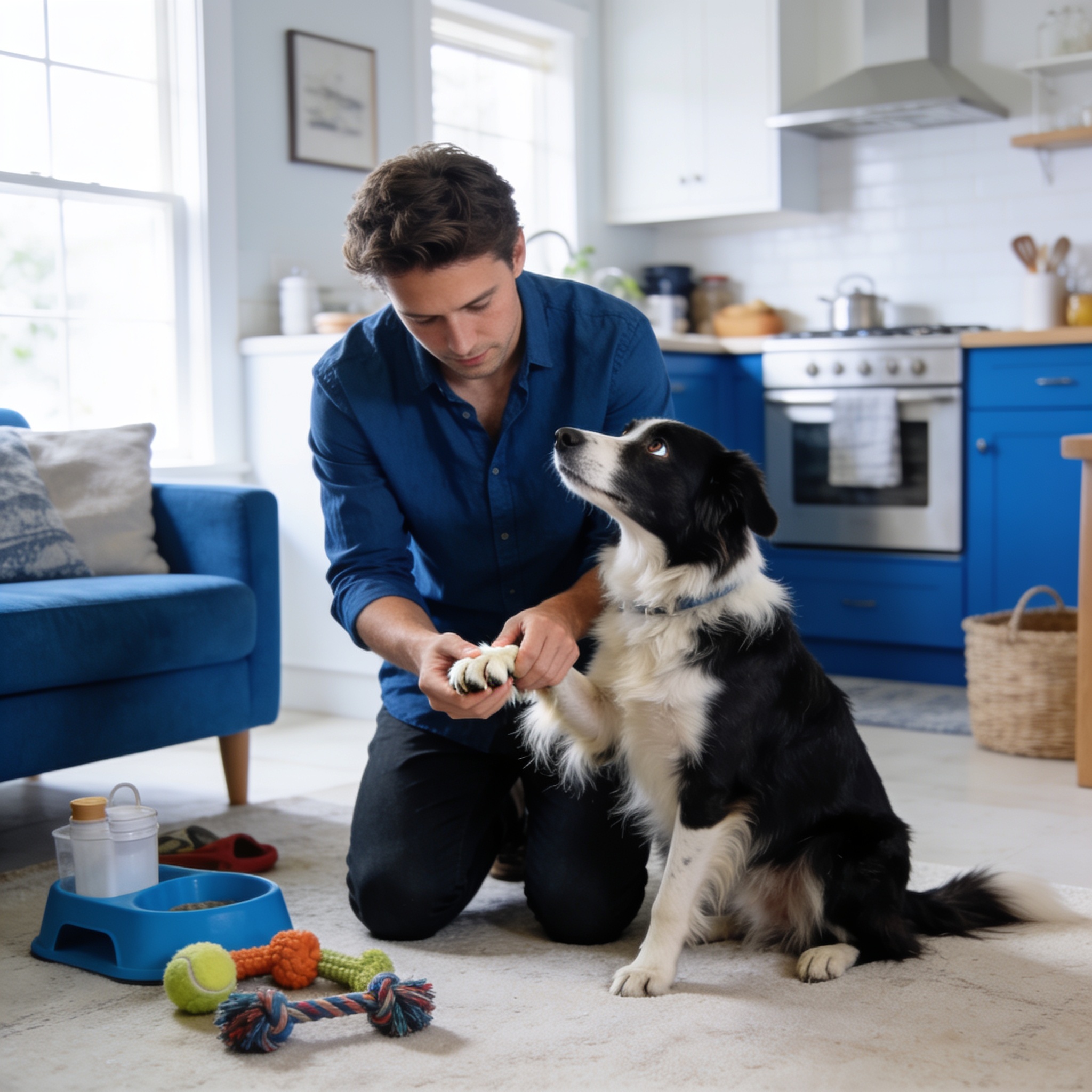
Rain, heat, and cold do not cancel a bladder. You dress for the weather and go. That is mental toughness in a very ordinary form. Weekend grooming, nail care, and bath time teach you to finish a job that is messy and not fun.
Health and money awareness
Watching appetite, stools, and energy teaches observation. Noticing that kibble is low teaches planning. The AKC’s summary of dog-ownership benefits includes more activity and stronger routines. Those habits support both ends of the leash.
Setup costs of $500 to $2,000, monthly food, and $200 to $500 a year in routine vet care are part of the education. Families who track those numbers are practicing real budgeting. An emergency visit can be much higher. A savings habit is part of care, not an extra.
A simple jar or a separate savings account labeled for the dog makes the cost visible. When a teen wants a new toy for the dog, they can see whether the jar can cover it after food. That is money sense tied to a face they love, which is why it lasts longer than a worksheet.
Empathy and Emotional Skill
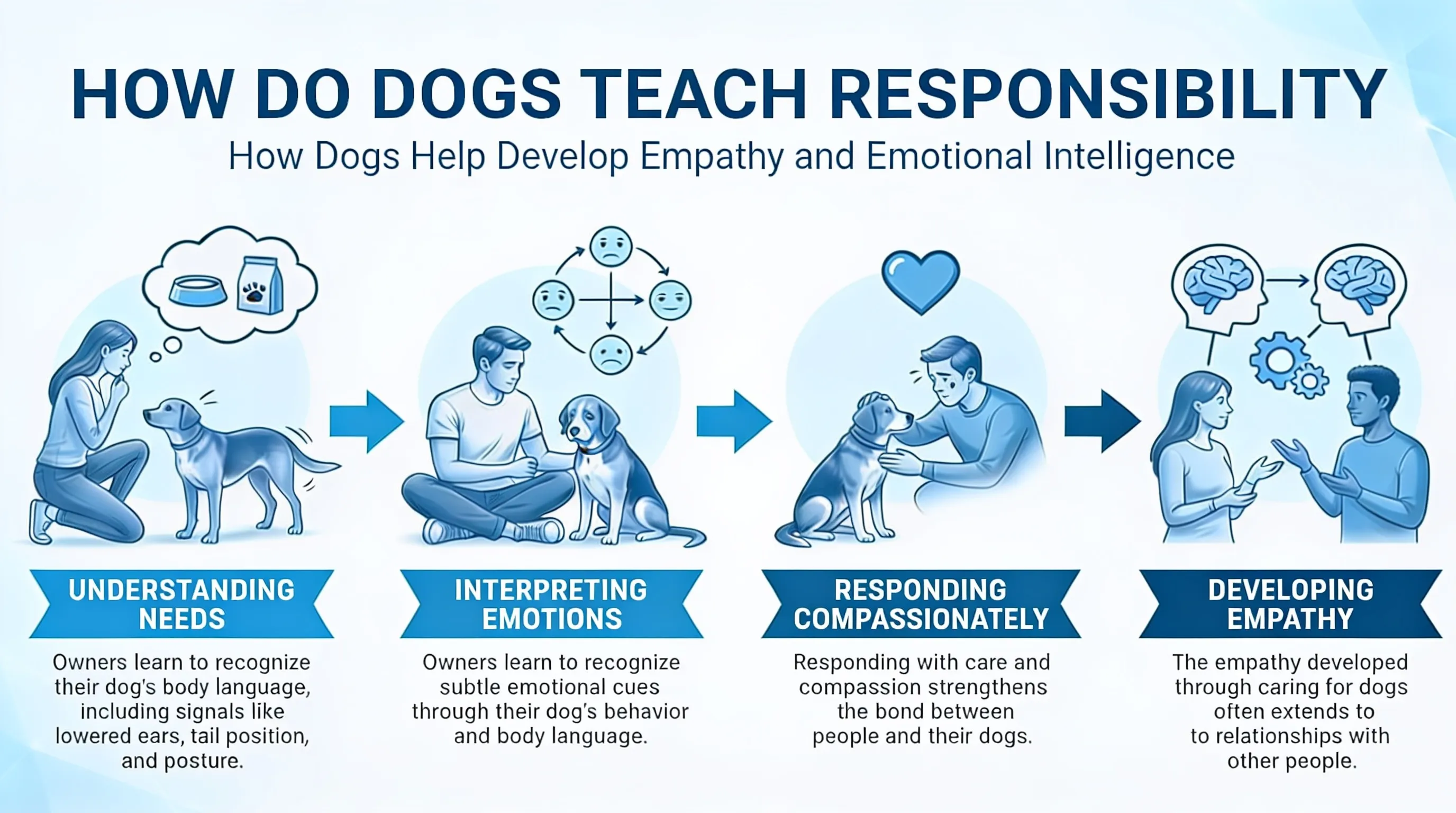
Dogs do not use words. You learn tail height, ear set, a stiff body, a soft mouth. That practice transfers. People who live with dogs often get better at noticing when a friend is off, even if nothing was said.
Caring for a sick or old dog teaches a harder skill: staying present when you cannot fix the problem. You offer comfort. You keep the routine. You make the kind choice at the end of life. Those are adult lessons.
Dogs also teach consent. A dog that walks away from a hug is giving you information. Respecting that is practice for every other relationship. If you have ever wondered why pets and people seem to match, part of the answer is this long practice of reading each other.
When Responsibility Slips
Setbacks are part of learning responsibility through pets. The rule is simple. The dog stays safe. The person still faces the result.
If a child forgets water, the adult fills the bowl, then the child owns the next refill and a reminder system. If a teen skips a walk, the walk still happens, and the teen owes the next two. Do not punish the dog. Do not give a speech that lasts longer than the missed task.
Repeated misses usually mean the plan is wrong. The schedule is too tight, the task is too big, or the person is not ready. Waiting to adopt can be the most responsible choice. A dog is not a tool for fixing a family problem.
Conclusion
Dogs teach responsibility by needing you on ordinary days. Feed them. Walk them. Watch their health. Budget for their care. Read their signals. Start again after a miss without cruelty.
The life lessons from dogs are not abstract. They are a wet leash, a filled bowl, and a person who showed up. If you can keep those promises, you will keep others.
Emma & Buddy is here with clear education and support for families who want to do right by their animals. Start with the next meal and the next walk. That is the whole method.



 Ask ChatGPT
  Ask Claude
  Ask Perplexity