

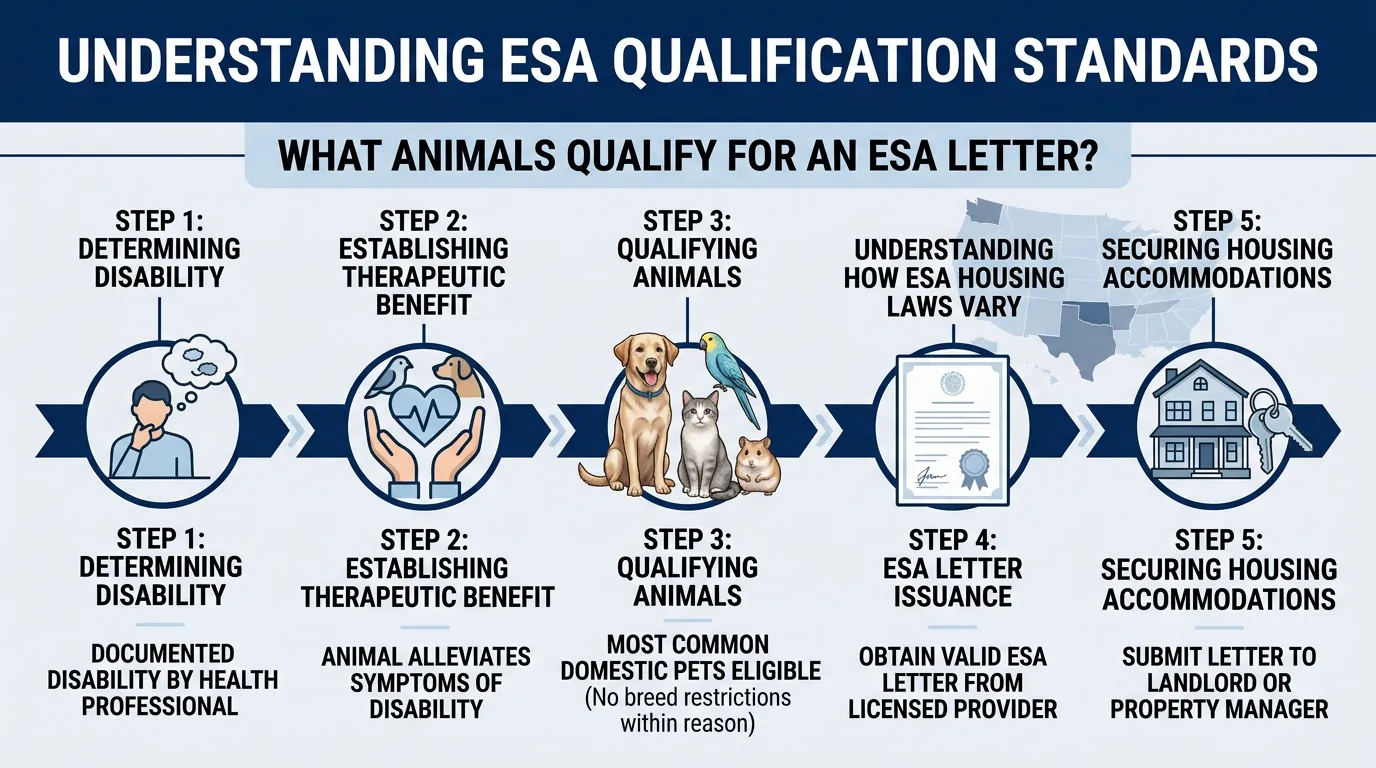
What animals qualify for an ESA letter? Dogs and cats are the most common choices. Rabbits, guinea pigs, birds, and certain reptiles can also qualify.
A licensed mental health professional decides if your animal helps ease your condition. The clinician documents their recommendation in your ESA letter. Housing offices review letters against their own policies to determine accommodation.
Learn about ESA qualification standards in this guide. We’ll show you which species are approved most often and walk you through the documentation you need. You’ll learn why some exotic animals qualify while others don’t. You’ll also see what makes dogs and cats the most common choices.
Some species face restrictions based on housing regulations and safety concerns.
What Animals Qualify for an ESA Letter: Understanding ESA Qualification Standards
Emotional support animals have a legal and medical purpose that ordinary pets don’t. Once you know how ESA qualification and documentation work, you can check whether your situation meets federal requirements.
Legal Definition of Emotional Support Animals
An emotional support animal helps someone with a diagnosed mental health condition. The Fair Housing Act recognizes ESAs and requires housing providers to accommodate them, even in no-pet buildings.
ESAs don’t need specialized training like service animals. Their presence alone must alleviate symptoms of your condition.
Federal protections apply to housing, though travel accommodations have become more restricted since 2027. Knowing how ESA housing laws vary by state helps you assert your rights.
Medical Necessity Requirements
A licensed mental health professional must assess you and decide that you need an ESA. This can be a therapist, psychologist, psychiatrist, or physician who already treats you.
The professional checks whether your condition is a disability that an ESA would help manage. They must document specific therapeutic benefits the animal provides.
Read the full breakdown in ESA FAQs.
Documentation must come from your treating healthcare provider, not a random online assessment. The letter should explain your diagnosis and why an animal helps your treatment plan.
Difference Between ESAs and Service Animals
Service animals receive extensive training to perform specific tasks for people with disabilities. They have public access rights that ESAs don’t possess.
ESAs provide comfort through companionship rather than trained tasks. They qualify for housing protections but can’t accompany you into restaurants, stores, or other public spaces.
This distinction affects what animals qualify for an ESA letter, since training requirements don’t limit your options the way they do for service animals.
Dogs and Cats as Emotional Support Animals
Dogs and cats are the most popular emotional support animals. Both are domesticated and bond closely with people, so they make steady, comforting companions for anyone managing a mental health condition.
Why Dogs Are the Most Common ESAs
Dogs make up about 75% of registered ESAs. They are social and bond strongly with their owners. They also respond to human emotions, add routine through daily walks and feeding, and offer unconditional companionship.
Their presence helps reduce anxiety, combat depression, and provide a sense of purpose. Many people use services like Emma and Buddy to get ESA documentation for their dogs.
Cat ESA Considerations
Cats give effective emotional support to people with anxiety and depression, especially those who prefer quiet companionship. Their purring is calming. They are independent yet affectionate, so they suit people with different energy levels.
Cat owners get the routine of caring for a pet without the physical demands of a dog. Learning how Emma & Buddy works can help cat owners get the documentation they need for housing protections.
Breed and Size Restrictions
No breed restrictions exist under federal law for ESA designation. Housing providers can’t deny an ESA based only on size or breed, even for dogs often labeled aggressive.
Temperament and behavior matter more than species for ESA approval. Landlords must honor your ESA letter for housing purposes, whatever your animal’s size or breed. They can deny animals that pose a direct safety threat.
Small Mammals and Rodents as ESAs
Small mammals can ease mental health conditions in their own ways, so they make good ESA candidates. Their compact size and manageable care requirements suit various living situations.
Rabbits and Guinea Pigs
Rabbits qualify as ESAs and work well for individuals with limited mobility. Their calm presence and predictable routines provide structure without demanding extensive physical activity.
Guinea pigs offer companionship and routine for people managing depression. Their social vocalizations and interactive behaviors create engagement that helps combat isolation.
Housing Considerations for Small Mammals
Landlords must accommodate small mammal ESAs in no-pet housing. Housing providers cannot deny requests based solely on species preference.
Talk to your housing provider upfront about enclosures and care. At Emma and Buddy, we recommend documenting cage dimensions and maintenance plans, so you can address concerns before you move in.
Knowing how to obtain legitimate ESA documentation protects both you and your housing provider. Clear communication about your animal’s therapeutic role prevents misunderstandings.
Birds as Emotional Support Animals
Birds qualify as emotional support animals when they ease a mental health condition and a clinician documents it. They are less common than dogs or cats, but they can help people who manage anxiety, depression, and mood disorders.
Parrots and Parakeets
Parrots and parakeets make effective ESAs due to their interactive and social behaviors. These birds bond strongly with their owners and respond to speech, which gives you daily interaction.

Their regular care gives people with mood disorders routine and purpose. A predictable schedule of feeding, cage cleaning, and social time adds structure that supports mental health treatment.
Other Avian Species
Cockatiels, finches, and canaries can also qualify when a mental health professional documents their therapeutic value. Each species offers a different level of interaction. Cockatiels are vocal, while finches are calmer and provide quiet companionship.
Special Considerations for Bird ESAs
You may need to discuss noise with your housing provider. According to HUD housing policy guidance, though, vocalizations alone can’t justify an ESA denial. Your documentation should explain how a bird helps with your specific mental health needs.
Travel rules for bird ESAs have become stricter since the 2027 policy changes. Airlines now treat birds as pets, not assistance animals. That means standard pet fees and carrier rules for cabin travel.
Reptiles and Exotic Animals as ESAs
Reptiles and exotic animals occupy a unique space in emotional support animal designation. They are less common than traditional pets, but they can qualify when a clinician documents their therapeutic benefit.
Reptile ESA Qualification
Snakes, lizards, and turtles can qualify as ESAs with documentation from a licensed mental health professional. The clinician must explain how the reptile eases specific symptoms of qualifying mental health conditions, such as anxiety or depression.
For example, a person with social anxiety might find that caring for a bearded dragon adds routine and responsibility without the social demands of a dog. The therapist’s letter must articulate these specific therapeutic benefits rather than general companionship.
Exotic Pet Considerations
A clinician who evaluates an exotic species must consider whether the animal can be housed in a typical home. Housing providers may ask for more documentation about safety, especially for larger reptiles or unusual species.
The assessment should explain how the animal’s care needs fit your living situation and treatment goals.
Legal and Practical Limitations
Local and state regulations often restrict certain exotic species regardless of ESA status. Venomous snakes, large constrictors, and endangered species are often banned by laws that override federal ESA protections.
Service animal laws recognize miniature horses, but they rarely qualify as ESAs because housing them is impractical. Landlords can deny a request when an animal poses a real safety risk or needs changes beyond a reasonable accommodation.
Animals That Do Not Qualify for ESA Letters
Wild animals and endangered species can’t receive ESA designation under any circumstances. That includes wolves, bears, primates, and any species protected by conservation laws.
Farm animals usually don’t qualify unless you can house them properly at home. Pigs, goats, and chickens face practical barriers in most housing situations.
Safety and Health Concerns
Animals posing direct threats to health or safety are excluded from ESA protections. Venomous species like certain snakes and spiders face legal restrictions beyond ESA considerations.
According to ESA documentation requirements, a mental health professional must check whether an animal poses an unreasonable risk to others in shared housing.
Why Some Animals Are Excluded
Mental health professionals must consider practicality and safety when recommending ESAs. An animal that requires specialized care, poses sanitation concerns, or creates legitimate safety risks will not receive approval.
Housing providers can deny an ESA if it would cause major property damage or a health hazard that can’t be reduced. The therapeutic benefit must outweigh practical concerns for approval.
The ESA Letter Process and Requirements
To get a valid ESA letter, you need a licensed mental health professional who can evaluate your condition and treatment needs. The letter must come from a therapist, psychologist, psychiatrist, or physician with an active license in your state. They decide whether an emotional support animal would help your diagnosed condition.
Finding a Licensed Mental Health Professional
You can get an ESA letter from your current mental health provider or through telehealth. Online ESA services must connect you with professionals licensed in your state who perform real clinical evaluations.
Avoid companies that promise instant letters with no clinical assessment. They often produce fraudulent documentation.
What Your ESA Letter Must Include
Valid letters include your diagnosis and the nature of your treatment relationship with the provider. They also state the specific need for an ESA as part of your care. The letter should be on official letterhead with the provider’s license number, contact information, and signature.
The documentation must explain how the animal alleviates symptoms of your condition. Generic letters that lack these details may be rejected by housing providers or airlines.
Renewal and Ongoing Documentation
Letters typically require annual renewal to maintain housing and travel protections. Your mental health professional should reassess your condition and the continued need for your ESA during renewal.
Fraudulent ESA documentation can result in legal consequences and housing denial. Landlords increasingly verify credentials with state licensing boards, so only legitimate letters from real providers will hold up to scrutiny.
Conclusion
The answer to what animals qualify for an ESA letter depends less on the species. It depends more on the therapeutic relationship between you and a licensed mental health professional.
Dogs and cats remain the most common choices. Any animal that provides documented mental health benefits can qualify. This includes rabbits, birds, and certain reptiles. The clinical assessment of your specific needs matters more than the type of pet you choose.
If you’re considering an ESA, start by talking to a licensed therapist, psychologist, or psychiatrist. They can decide whether an animal would help your treatment plan. Be ready to discuss your condition, how your pet helps with symptoms, and any housing or travel concerns.
Choose an animal that fits your lifestyle and home and truly supports your mental health needs.
Emma and Buddy connects you with licensed mental health professionals who provide legitimate ESA evaluations and documentation through a simple, compliant process.






 Ask ChatGPT
 Ask Claude
 Ask Perplexity