

How long does an ESA letter last?
Most emotional support animal letters stay valid for 12 months from the date your mental health professional issues them. After that, you need to renew your letter to keep your housing protections.
Without a current letter, landlords can legally reject your request to live with your emotional support animal. Renewal requires a follow-up evaluation with a licensed mental health professional to confirm your condition still qualifies for an ESA and your animal continues providing therapeutic benefit.
This guide covers how long your ESA letter stays valid and what happens when it expires. You’ll learn how to renew without losing coverage and what can change your letter’s length. You’ll also see which myths could put your housing rights at risk.
Standard ESA Letter Validity Period
Most emotional support animal letters stay valid for 12 months from the date a licensed mental health professional issues them.
Understanding how long does an ESA letter last helps protect your housing rights. This standard applies across the United States and covers both housing and travel.
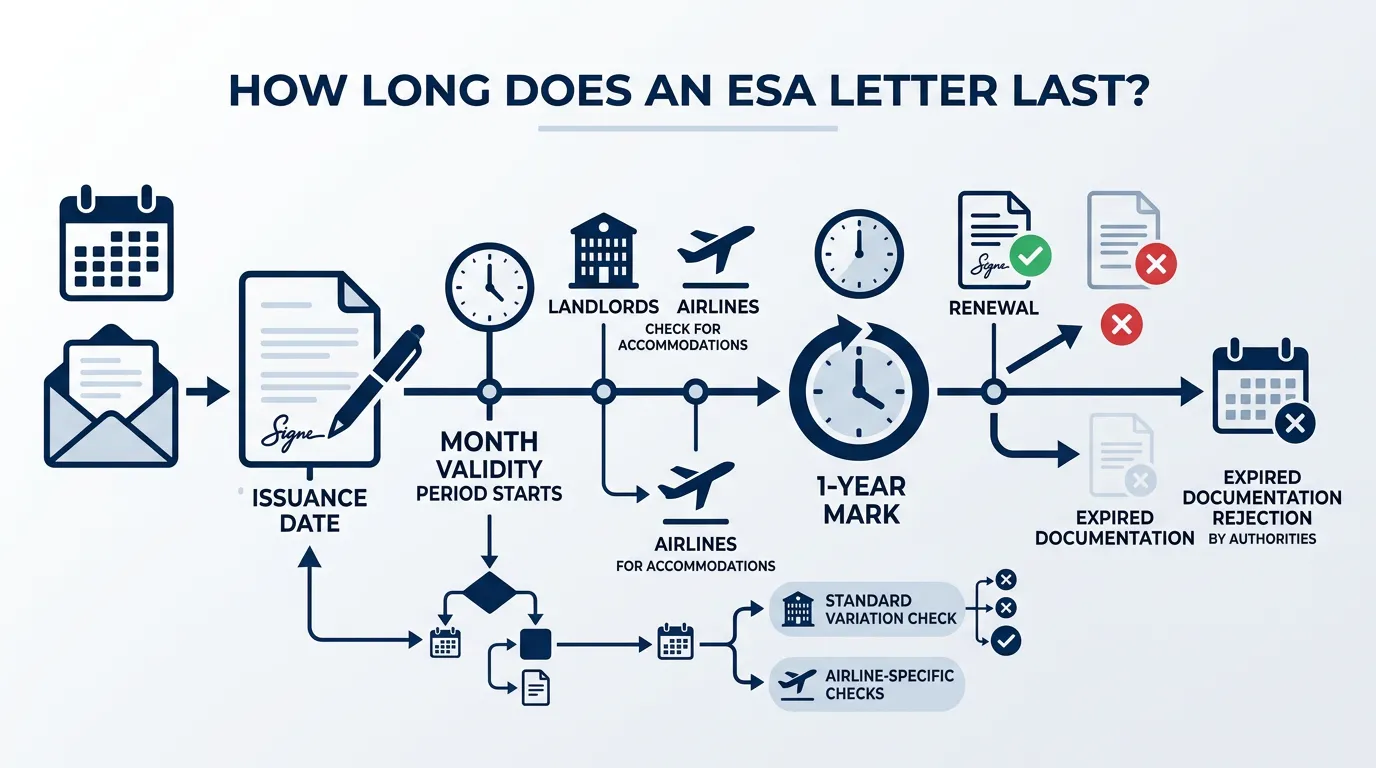
The One-Year Standard Explained
The 12-month period starts the day your mental health professional signs your letter. The letter should show this date in plain view. Landlords and airlines will check it when you ask for accommodations.
If the letter shows no expiration date, housing providers and airlines add one year to the issue date. You can request a new letter once your current one reaches the 12-month mark.
Understanding how colleges accept ESA letters for housing helps students plan their documentation timeline before each academic year begins.
Why ESA Letters Expire
Annual expiration follows medical best practice, which calls for regular mental health check-ins. Your condition, your treatment needs, and the help your animal provides can all change over time.
Your provider needs to check that you still qualify for an ESA. They also confirm that your animal still helps with your symptoms. This protects both you and the ESA system.
State-Specific Variations
Some housing providers may accept letters up to 18 months old, but this is rare. Most landlords and airlines stick to the 12-month standard and reject expired letters.
Federal law sets no official grace period. The Fair Housing Act requires a current, valid letter, and yours becomes invalid the day it expires.
Checking comprehensive guides for different ESA situations clarifies specific requirements for your housing type or travel plans. Different scenarios may have unique documentation expectations, but the one-year validity remains consistent.
What Happens When Your ESA Letter Expires
An expired ESA letter no longer gives you legal protection under the Fair Housing Act. Without a valid letter, you lose the right to ask landlords for reasonable accommodations.
Once the letter expires, the law treats your ESA like a regular pet. Housing providers can then apply standard pet rules, such as breed restrictions, weight limits, and monthly pet fees.
Housing and Travel Implications
Landlords can legally deny your ESA accommodation request if your letter has expired. You can learn more about how to submit an ESA request to your landlord to ensure you have current documentation ready.
Airlines may refuse to let your ESA travel in the cabin without valid papers. Most carriers want a letter dated within the past 12 months. Gate agents check the date before boarding.
If you’re in the process of getting an ESA letter for the first time or renewing, understanding these protections helps you avoid coverage gaps. At Emma and Buddy, we help pet owners maintain continuous ESA coverage to prevent disruptions.
Grace Periods and Exceptions
Most providers do not offer grace periods. Your letter is invalid the moment it expires, so late renewals get no buffer time.
To restore your protections, you need a new letter. That means booking a new evaluation with a licensed mental health professional and completing a full reassessment.
Proactive renewal before expiration prevents gaps in coverage and potential housing or travel disruptions. Starting your renewal 30-60 days early ensures you never lose your legal protections.
The ESA Letter Renewal Process
Renewing your ESA letter doesn’t need to be complicated if you plan ahead and understand what’s involved. The process follows a similar path to your initial application but typically moves faster since you already have documentation history.
When to Start Your Renewal
Begin your renewal process 30-60 days before your current letter expires to maintain continuous coverage. This window gives you enough time to schedule an appointment, complete the evaluation, and receive your new documentation without any gaps.
Starting early prevents situations where your letter expires while you’re waiting for renewal approval. Many people set calendar reminders at both the 60-day and 30-day marks to stay on track.
What the Renewal Evaluation Involves
Renewal requires a follow-up evaluation with a licensed mental health professional to reassess your current needs. The professional will review whether your condition still qualifies you for an ESA and if the animal continues to provide therapeutic benefit.
According to ESA renewal guidelines, this evaluation focuses on your current mental health status rather than repeating the entire initial assessment. You’ll discuss any changes in your condition, treatment, or living situation since your last evaluation.
At Emma and Buddy, licensed professionals conduct these renewal evaluations to ensure your documentation stays current and valid. If you want to learn more about how the renewal evaluation process works, you can review the specific steps involved.
Renewal vs. New Application
Renewals are typically faster and less expensive than initial applications since you have an established relationship with a provider. The professional already has your history on file, which streamlines the evaluation.

You may renew with your original provider or choose a different licensed professional if circumstances have changed. Either way, the new letter will have a fresh 12-month validity period starting from the renewal date, not from when your previous letter expires.
Factors That Can Affect Your ESA Letter Duration
While most ESA letters remain valid for 12 months, several factors can shorten or complicate this standard timeframe. Understanding these variables helps you maintain proper documentation and avoid gaps in coverage.
Mental Health Professional Discretion
Your mental health professional may issue a letter with a shorter validity period if your condition requires closer monitoring. Some providers set six-month expiration dates for patients with fluctuating symptoms or those early in treatment.
This approach ensures your therapeutic needs are regularly reassessed. The professional’s clinical judgment takes precedence over standard timelines.
Changing Circumstances
Changes in your mental health status, living situation, or treatment plan may require earlier re-evaluation. If you switch therapists or psychiatrists, the new provider will likely conduct a fresh assessment regardless of your existing letter’s expiration date.
Moving to a new state can also affect your documentation, as understanding how state-specific ESA laws vary helps you prepare for different requirements. Your provider may issue a new letter to reflect current circumstances rather than wait for the original to expire.
Provider-Specific Requirements
Housing providers and institutions sometimes impose their own documentation standards that differ from the standard 12-month period.
Letters from questionable online services may be rejected outright, regardless of their stated validity period. Landlords and airlines often scrutinize the source and legitimacy of your documentation, not just the dates printed on it.
Maintaining Continuous ESA Coverage
Staying ahead of your ESA letter’s expiration protects your housing rights and prevents stressful gaps in coverage. A proactive approach saves time and ensures you always have valid documentation when you need it.
Setting Up Renewal Reminders
Set calendar reminders 60 days and 30 days before your letter expires. This gives you enough time to schedule an appointment if your provider has limited availability.
Store your letter’s expiration date in your phone and share it with family members who can help remind you. Many people also add the date to their email calendar with automatic notifications.
Building a Relationship with Your Provider
Maintain regular contact with your mental health professional throughout the year, not just at renewal time. Consider scheduling your annual mental health check-up to coincide with your ESA letter renewal for efficiency. This approach streamlines both your care and your paperwork.
Documentation Best Practices
Keep both digital and physical copies of your current ESA letter in multiple secure locations. Store one copy in cloud storage, one on your phone, and one printed copy at home.
Document any changes in your condition or your ESA’s therapeutic benefits to share during renewal evaluations. Write brief notes about specific ways your animal helps you manage symptoms. These details support your renewal request and help your provider write a stronger letter.
Common Misconceptions About ESA Letter Expiration
Many people hold false beliefs about ESA letter validity that can lead to gaps in legal protection. These myths often stem from confusion about housing laws and online misinformation.
Myth: ESA letters never expire if your condition is permanent.
Reality: Annual renewals are required regardless of whether your mental health condition is chronic or temporary.
Myth: You can use the same letter for multiple animals. Reality: Each ESA requires its own specific documentation detailing how that particular animal provides therapeutic benefit.
Myth: Online certificates last longer than letters from in-person providers. Reality: Validity periods are the same. However, online certificates from non-licensed sources may be invalid from day one.
Key Considerations
Myth: Landlords must accept slightly expired letters.
Reality: Landlords can legally require current, valid documentation. They may deny accommodation requests when letters have expired, even by a few days.
Myth: Once approved, you never need another evaluation.
Reality: Annual reassessment is part of responsible ESA documentation. It helps verify your animal continues to meet your therapeutic needs.
Understanding these facts helps you maintain proper documentation and avoid disruptions to your ESA accommodations. Proactive renewal prevents legal complications with housing providers.
Conclusion
Knowing how long does an ESA letter last protects you from unexpected gaps in coverage that could affect your housing rights and peace of mind. Most ESA letters expire after 12 months, and that expiration happens immediately, no grace period, no exceptions.
The best approach is to start your renewal 30 to 60 days before your current letter expires. This gives you plenty of time to complete the evaluation and receive your updated documentation.
Set reminders now for both 60 and 30 days before your expiration date. Keep digital and physical copies of your letter accessible, and maintain regular contact with your mental health provider during the year. These simple steps prevent last-minute stress and ensure your emotional support animal’s protections remain uninterrupted.
Don’t wait until your ESA letter expires.
Start your renewal process today with Emma and Buddy’s efficient evaluation service to keep your protections current and avoid any disruption to your accommodations.






 Ask ChatGPT
 Ask Claude
 Ask Perplexity