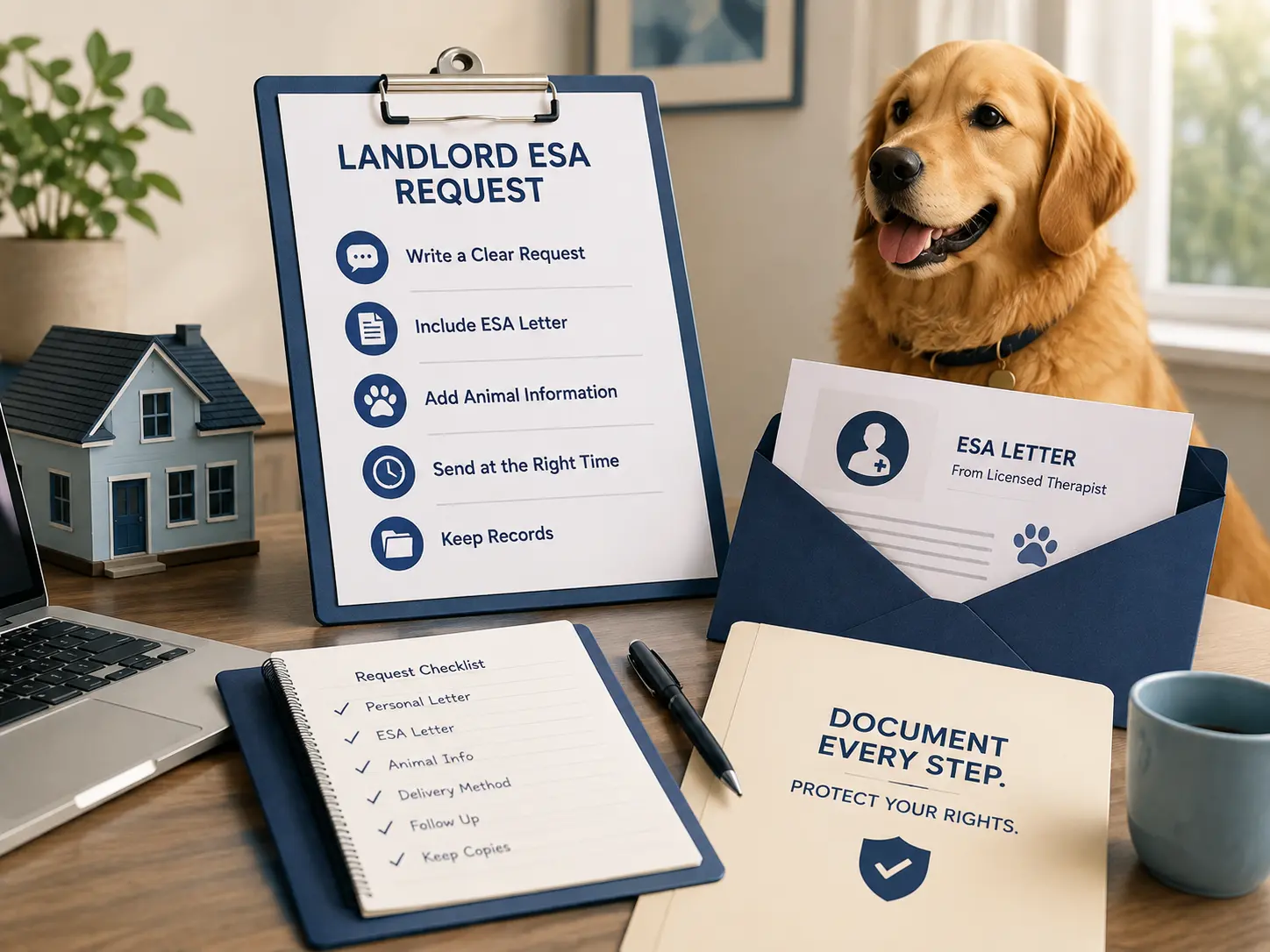

A landlord ESA request is a formal, written ask. You send it to a housing provider so your emotional support animal can live with you, even in a no-pets building. Under the Fair Housing Act, this is called a reasonable accommodation request. It works best when it is organized, timed well, and backed by real documentation.
Here’s the thing: most denied requests are not denied because the tenant did not qualify. They are denied because the request itself was messy, verbal, or missing a piece of paperwork. This guide walks you through the exact steps so your landlord ESA request goes in clean the first time.
You do not need a lawyer to make a landlord ESA request. You need a legitimate letter, a clear written message, and a bit of patience while your property manager reviews it. That said, the process does have real steps, and skipping one is usually what slows things down or leads to a denial you could have avoided.
Need a legitimate ESA letter for housing? Start with Emma & Buddy’s ESA for Housing service to connect with a licensed mental health professional and get the documentation you need to request a reasonable accommodation with confidence.
What a Landlord ESA Request Must Include
A landlord ESA request needs three parts to hold up: a written statement, an ESA letter for housing from a licensed provider, and a clear description of your animal. It also helps to know upfront that an ESA is different from a service animal. As ADA.gov explains, service animals are trained to do a specific task. An ESA simply offers comfort by being present. That is why housing rules for the two are not identical.
The written statement does not need to be long. State that you have a disability. Add that your animal helps with a symptom of it, and that you are asking for a reasonable accommodation under the Fair Housing Act reasonable accommodation guidance. No need to name your specific diagnosis.
Your ESA letter is the second piece. It should come from a therapist, counselor, psychiatrist, or physician who has an actual relationship with you. The ADA National Network’s guide on assistance animals explains that this letter needs to confirm two things. First, that you have a disability. Second, that the animal helps with at least one symptom.
Last, describe your animal. Species, breed if known, and general size are usually enough. Landlords are allowed to know what animal is moving in, even if they cannot ask about your condition.
One thing worth repeating, a landlord ESA request is not the place to over-explain. You are not required to describe your symptoms in detail, list your medications, or hand over therapy notes. Keep the personal details with your provider. Your written request only needs to state that you have a disability and that the animal helps with it.
It also helps to think about your building’s specific rules before you send anything. Some properties cap the number of animals per unit or ask about breed for insurance reasons. None of that changes your right to a reasonable accommodation. Knowing the property’s baseline policy ahead of time just means fewer surprises once your request is under review.
| Item | Purpose | Where to Get It |
|---|---|---|
| Written ESA Request | Formally asks your landlord for a reasonable accommodation under the Fair Housing Act. | Write it yourself or use a landlord ESA request template. |
| ESA Letter | Confirms you have a qualifying disability and that your emotional support animal helps with at least one symptom. | A licensed mental health professional or other qualified healthcare provider with an established relationship with you. |
| Animal Details | Identifies the animal that will live in the property (species, breed if known, and approximate size). | Provide the information yourself. |
When to Send Your Landlord ESA Request?
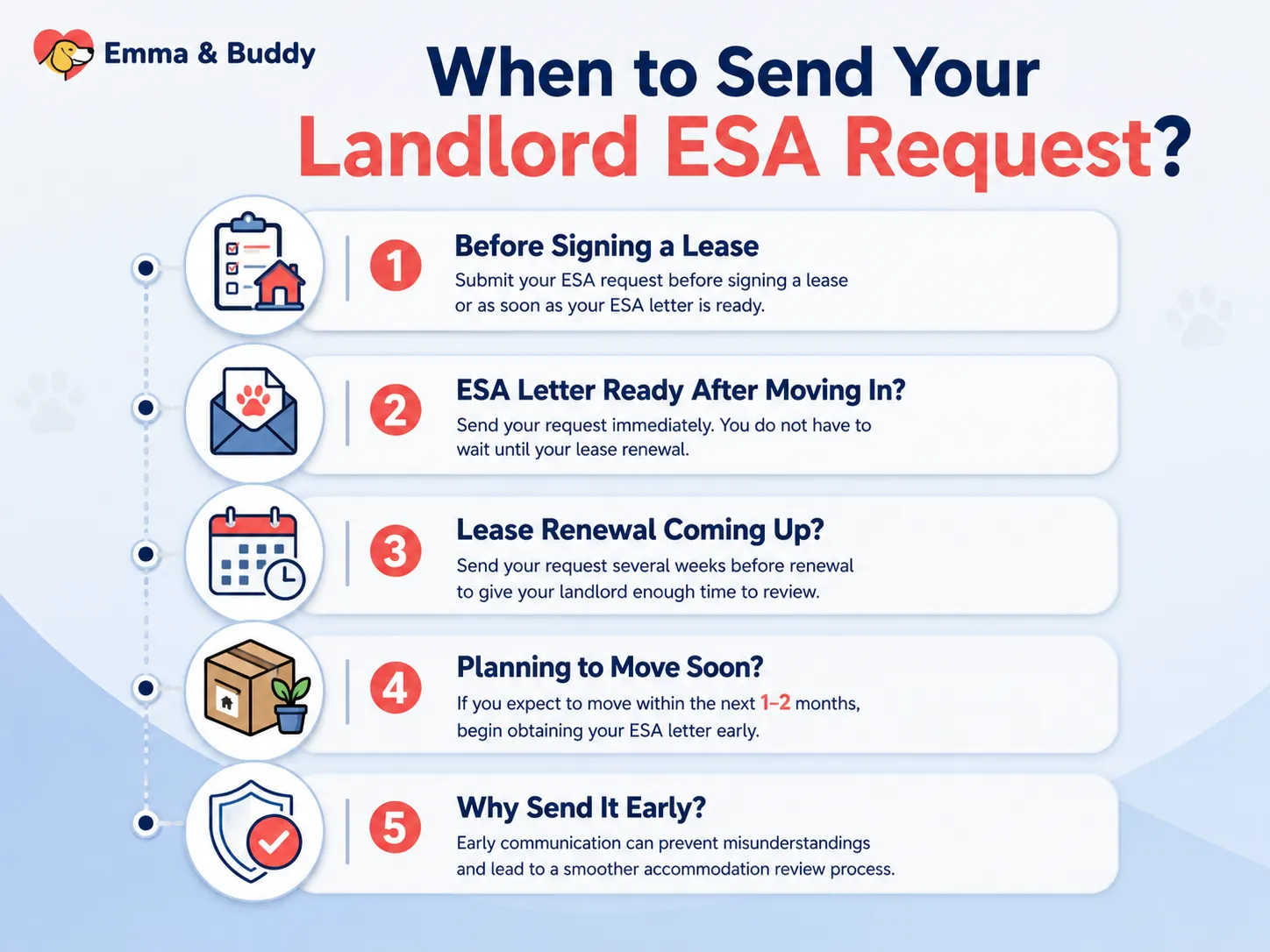
- Submitting your landlord ESA request before signing a lease or as soon as your ESA letter is ready gives the housing provider adequate time to review it.
- If you receive your ESA letter after moving in, send your request immediately. You do not have to wait until your lease renewal because the Fair Housing Act allows you to request a reasonable accommodation at any time.
- Sending your landlord ESA request several weeks before renewal gives your landlord more time to respond and helps avoid rushed decisions.
- If you expect to move within the next month or two, begin obtaining your ESA letter early instead of waiting until moving week. Early preparation typically leads to a smoother review process.
- If you have not yet signed a lease, informing the housing provider during the application process can prevent misunderstandings after you move in.
Step-by-Step: How to Submit a Landlord ESA Request
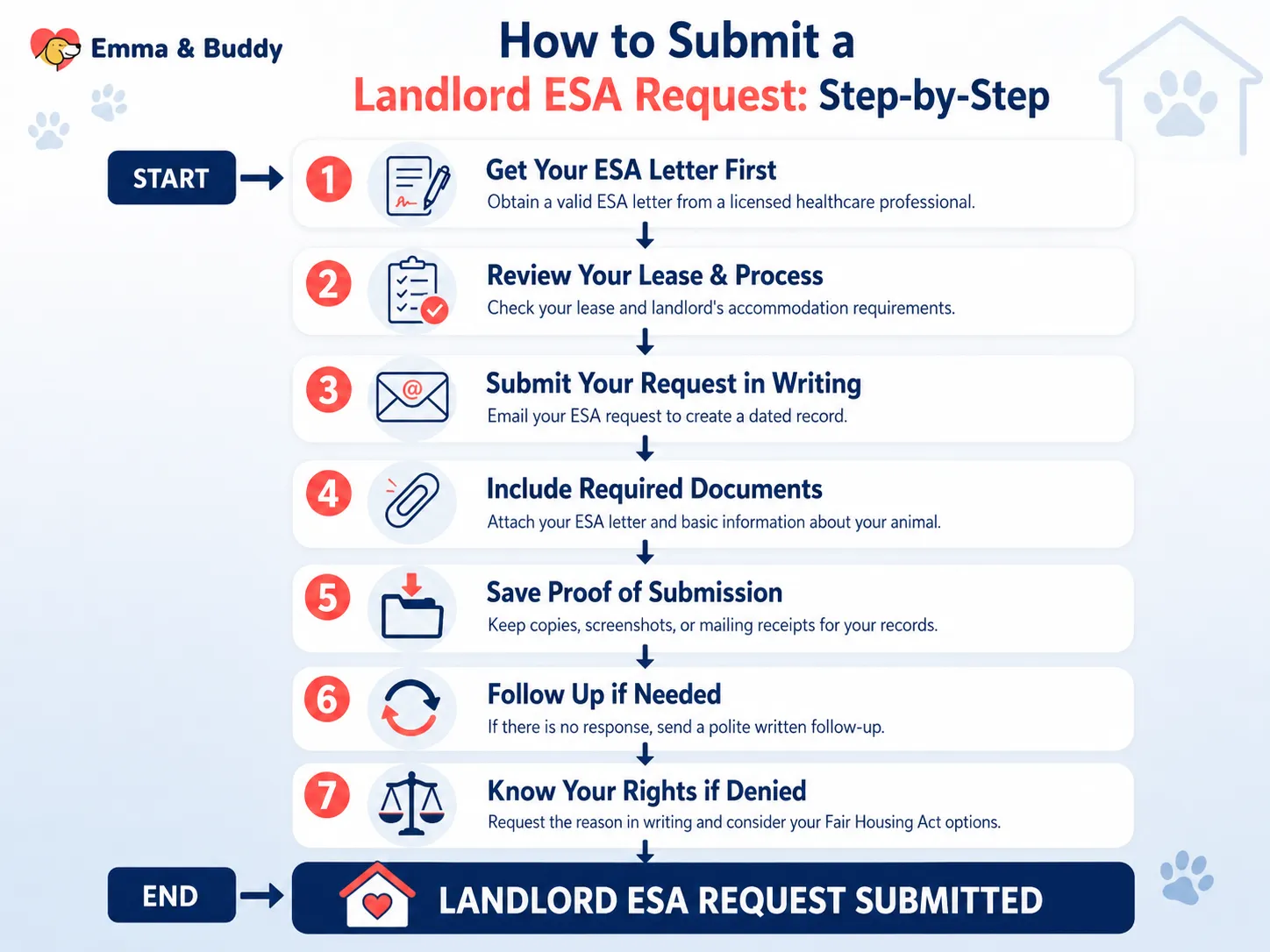
Follow this order and your landlord ESA request will be much harder to push back on.
Step 1: Get Your ESA Letter First
Do not submit a landlord ESA request until you have a valid ESA letter from a licensed healthcare professional and understand how to get an ESA letter. Your provider should evaluate your need for an emotional support animal through an established therapeutic relationship. Avoid websites that promise instant ESA certificates or registrations, as these are not recognized under federal housing guidance.
Step 2: Review Your Lease and Housing Provider’s Process
Before sending your request, check your lease agreement and ask whether your landlord or property management company has a specific reasonable accommodation process or required forms. Many apartment communities, housing authorities, and student housing providers have their own submission procedures.
Step 3: Submit Your Request in Writing
Always send your landlord ESA request in writing. Email is usually the best option because it creates a dated record of your communication. If your landlord requires paper documents, mail your request or deliver it in person and keep a copy for your records. Avoid relying solely on phone calls or verbal conversations.
Step 4: Include All Required Documentation
Attach your ESA letter and provide basic information about your emotional support animal, such as its species, breed (if known), and approximate size. Sending everything together reduces the chances of follow-up requests and speeds up the review process.
Step 5: Save Proof of Submission
Keep evidence that your landlord ESA request was submitted. Save a copy of your email, take a screenshot of the sent message, or retain certified mail receipts. This documentation may become important if your request is delayed or disputed.
Step 6: Follow Up if You Don’t Receive a Response
Housing providers may need time to review your request, so waiting one to two weeks before following up is generally reasonable. If you still have not received a response after several weeks, send a polite written follow-up asking for an update on your accommodation request.
Step 7: Understand Your Rights if Your Request Is Denied
If your landlord denies your ESA request, ask for the reason in writing. A housing provider generally cannot deny a reasonable accommodation request without a legitimate legal basis. If you believe your rights under the Fair Housing Act have been violated, you may be able to file a complaint with the U.S. Department of Housing and Urban Development (HUD).
The most common reason a landlord ESA request is delayed is submitting it before obtaining a valid ESA letter. Housing providers cannot properly evaluate an incomplete request. Taking a little extra time to gather the required documentation first can help your request move through the review process much more smoothly.
Don’t risk an incomplete request. Get your ESA housing letter from a licensed provider and give your landlord everything needed to review your accommodation request.
Can a landlord deny an ESA letter?
A landlord can only deny an ESA request in narrow cases, such as a documented direct threat or an undue burden. A no-pets rule, a breed ban, or a pet fee is not enough. Put the request in writing and attach a letter from a licensed mental health professional.
Common Mistakes That Get a Landlord ESA Request Denied
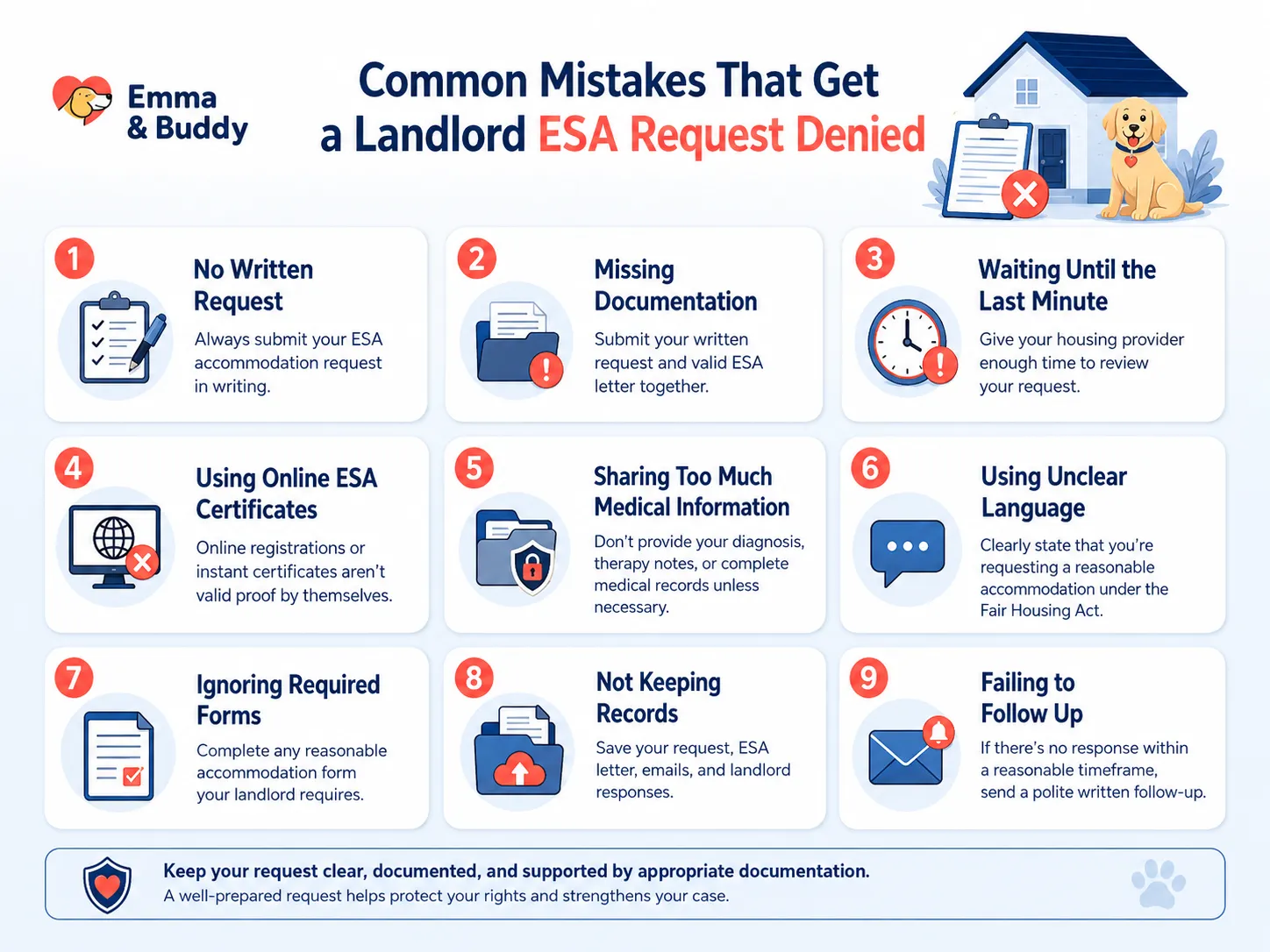
- Always submit your landlord ESA request in writing. Without a written record, it can be difficult to prove when or how you requested a reasonable accommodation.
- Your written request and ESA letter should be submitted together. Missing documentation often delays the review process.
- Submitting a landlord ESA request at the last minute leaves little time for your housing provider to review your documentation.
- Online registrations and instant certificates are not valid proof of an emotional support animal. Your ESA letter should come from a licensed healthcare professional who has an established relationship with you.
- Your landlord does not need your diagnosis, therapy notes, or complete medical records. Only submit the documentation necessary to support your accommodation request.
- Avoid language that makes your request sound optional or uncertain. Clearly state that you are requesting a reasonable accommodation under the Fair Housing Act.
- If your landlord or property manager requires a specific reasonable accommodation form, complete it along with your written request.
- Save your request, ESA letter, emails, and any responses in case you need to follow up or resolve a dispute later.
- If you have not received a response within a reasonable timeframe, send a polite written follow-up to check the status of your landlord ESA request.
How to Follow Up on a Landlord ESA Request
Submitting your landlord ESA request is only the first step. If you do not receive an immediate response, don’t assume your request has been denied. Housing providers often need time to review documentation, consult property owners, or verify their reasonable accommodation procedures.
Wait 1–2 Weeks Before Your First Follow-Up
It is normal for a landlord ESA request to take several days or even a couple of weeks to review. If you have not heard back after 7–14 days, send a brief, professional follow-up email. Your message should:
- Reference the date you submitted your original landlord ESA request.
- Ask for a status update on your accommodation request.
- Thank the housing provider for their time and consideration.
Send a Second Follow-Up if a Month Has Passed
If approximately 30 days have passed without a response, send another written follow-up. Politely explain that you are still awaiting a decision and ask when you can expect a response. The National Low Income Housing Coalition’s summary of HUD guidance notes that housing providers are expected to respond in a reasonable amount of time. A reasonable follow-up should:
- Mention your previous communication.
- Request an estimated timeline for a decision.
- Remain courteous and professional.
Stay Professional Throughout the Process
Even if the process takes longer than expected, keep every follow-up respectful and factual. A simple request for an update is usually more effective than expressing frustration or making accusations. Professional communication often helps keep the review process moving and demonstrates that your accommodation request is organized and well documented.
While review times vary, housing providers are generally expected to respond to reasonable accommodation requests within a reasonable timeframe. If your landlord repeatedly ignores your landlord ESA request or refuses to respond without explanation, you may wish to learn more about your rights under the Fair Housing Act and the options available if your request is unreasonably delayed or denied.
What to Do If Your Landlord ESA Request Is Denied
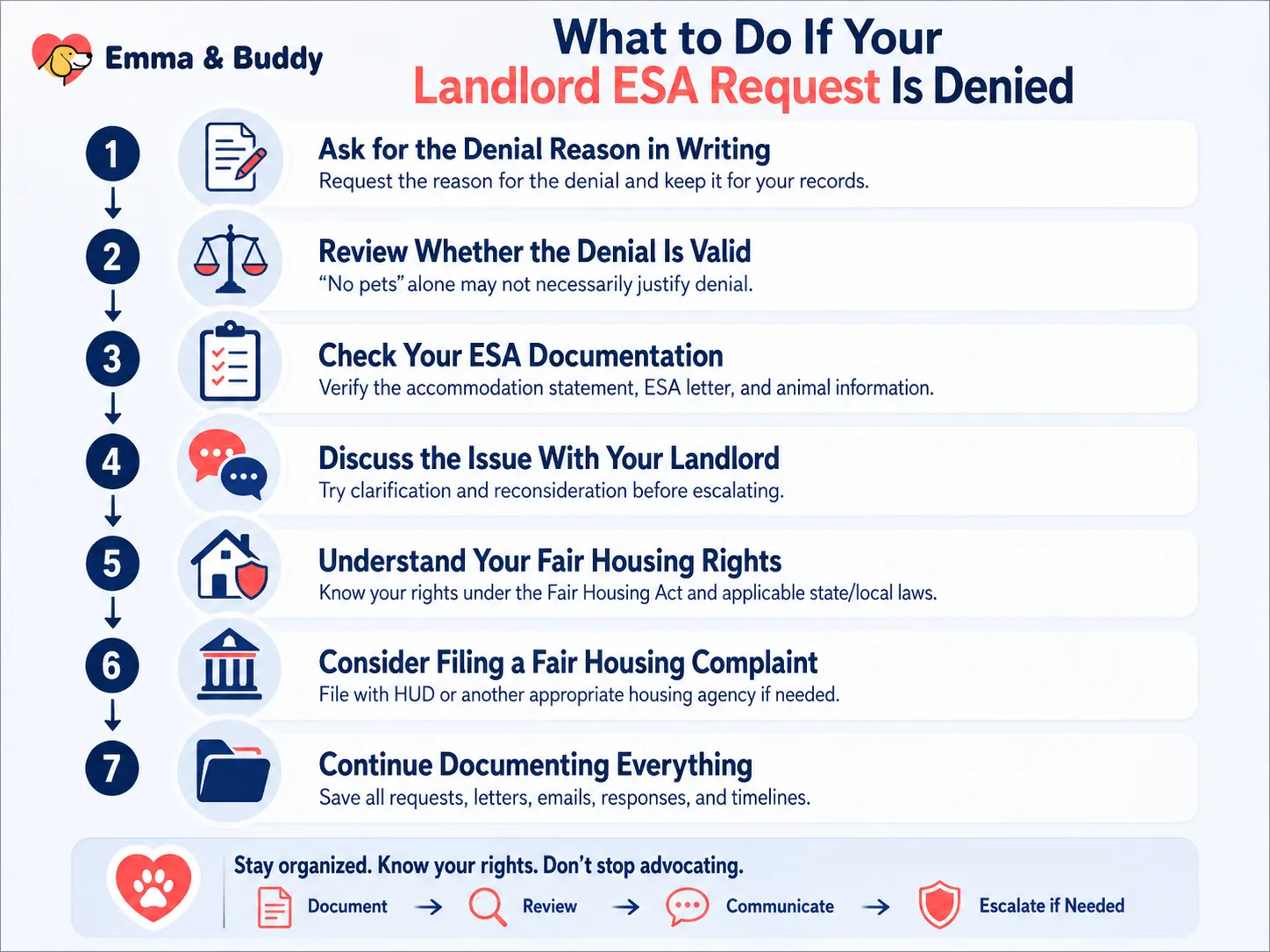
A denied landlord ESA request does not always mean the process is over. How you respond after a denial can affect whether the issue gets resolved. Follow these steps to understand your options and protect your rights.
Step 1: Ask for the Denial Reason in Writing
Start by requesting a written explanation from your landlord or property manager. A housing provider should be able to explain why they denied your reasonable accommodation request. Common reasons may include concerns about missing documentation, a direct safety risk, or an undue financial or administrative burden. Having the reason in writing helps you understand the issue and creates a clear record of the decision.
Step 2: Review Whether the Denial Is Based on a Valid Reason
Not every reason for denial is legally sufficient. If your landlord says the request was denied only because the building has a “no pets allowed” policy, that may not be enough to reject a properly documented ESA request. A valid emotional support animal request is considered a reasonable accommodation under fair housing laws when it is supported by appropriate documentation and related to a disability.
Step 3: Check Your ESA Documentation
Before moving forward, review the materials you submitted with your landlord ESA request. Make sure your request included a written accommodation statement, a valid ESA letter from a qualified healthcare provider, and basic information about your animal. In some cases, a denial happens because the housing provider believes the documentation is incomplete or needs clarification. Correcting missing information may resolve the issue without further action.
Step 4: Discuss the Issue With Your Landlord or Property Manager
Before escalating the situation, consider having a direct conversation with your housing provider. Some denials happen because of confusion about ESA requirements rather than an intentional refusal to provide an accommodation. A clarification from your healthcare provider or additional documentation may help your landlord better understand your request and reconsider the decision.
Step 5: Understand Your Fair Housing Rights
The Fair Housing Act continues to protect eligible tenants who request reasonable accommodations for assistance animals. While federal guidance and enforcement approaches may change over time, the underlying housing protections remain in place. State and local fair housing laws may also provide additional protections depending on where you live. A complete, organized, and properly documented landlord ESA request remains one of the most important tools for supporting your accommodation request.
Step 6: Consider Filing a Fair Housing Complaint
If your landlord refuses to reconsider the decision or you believe your request was denied unfairly, you may consider filing a fair housing complaint through HUD or another appropriate housing agency. Before filing, gather all important records, including your original request, ESA letter, denial notice, emails, and any follow-up communication. Keep in mind that complaint deadlines may apply, so avoid waiting too long if you believe your rights have been violated.
Step 7: Continue Documenting Everything
Throughout the process, keep a complete record of every interaction related to your landlord ESA request. Save copies of your documents, emails, letters, and responses in one organized location. A strong paper trail can help you track the timeline, resolve misunderstandings, and support your position if further action becomes necessary.
Conclusion
A landlord ESA request does not need to feel like a legal battle between you and your housing provider. The process is often smoother when you treat it as a professional reasonable accommodation request. Start by getting a valid ESA letter from a licensed provider, prepare a clear written request, attach your supporting documentation, and submit everything with enough time for your landlord to review. If you do not receive a response, follow up politely and keep records of every email, letter, and document related to your request.
While emotional support animal housing rules and federal guidance have changed over time, the foundation of a strong landlord ESA request remains the same: legitimate documentation, a clear written request, and proper timing. Need help getting your ESA letter ready before submitting your request? Emma & Buddy can help you get started with compliant ESA documentation so you can approach the housing process with confidence.






 Ask ChatGPT
  Ask Claude
  Ask Perplexity