

An ESA letter for HOA review is a document from a licensed clinician. It supports your request to keep an emotional support animal in a community with pet rules. It is not a pass.
The board reviews your request. The outcome depends on your facts, your documents, and the rules where you live.
This page covers what the letter is, what an HOA can ask for, and what it cannot demand. It also shows how to send the letter and what to do if the board stalls or says no. It is general education, not legal advice.
What an ESA Letter for HOA Requests Is
An emotional support animal eases symptoms of a disability, usually a mental health condition. Many fair housing rules and state laws treat it as an assistance animal, not a pet. In May 2026, HUD changed how it enforces these requests. It now focuses on animals trained to do disability-related tasks. Courts and state laws can still protect emotional support animals. Your request is called a reasonable accommodation. You ask the HOA to adjust a rule, such as a no-pet policy, because of a disability-related need.
The letter supports that request. A licensed clinician who has evaluated you writes it, and it usually includes:
-
The clinician’s license type, license number, and state
-
A statement that the clinician evaluated you or provides care to you
-
A statement that you have a disability-related need for the animal
-
The date and the clinician’s signature
The letter does not need to name your diagnosis or describe your treatment.

Why the Clinician Matters
Boards see many weak documents, so they look closely at who wrote the letter. A letter from a clinician who evaluated you carries more weight than a certificate or a registry listing. Instant letters and pet registries get rejected often. Vests, ID cards, and registry numbers do not replace a clinician’s letter.
If you want to see how a licensed therapist evaluation works, read about our ESA housing letter process.
What an HOA Can Ask For
An HOA can handle your request like any other accommodation request. When your need is not obvious, it can ask for reliable documentation. In most cases that means a few simple items:
-
A written request to keep the animal as an accommodation
-
A letter from a licensed clinician that supports the disability-related need
-
Basic details about the animal, such as the type of animal and how to reach you
A board can also check that the letter is real. It can contact the clinician’s office to verify the license and the letter itself. That check is meant to verify the letter, not to collect your health records.
HUD has published guidance on how housing providers should treat assistance animal requests. You can read it on the HUD assistance animals page. Under fair housing rules, a board may decline only in limited cases. One case is when a specific animal poses a direct threat that cannot be reduced. Another is when the request would create an undue burden. A letter supports your request, but it does not promise a result.

What an HOA Cannot Demand
Boards sometimes ask for more than the rules allow. In general, an HOA should not demand any of the following:
-
Your diagnosis or medical records. The letter only needs to connect your disability-related need to the animal.
-
A registry listing, certification, or training proof. These are pet or service animal items, not part of an ESA request.
-
Pet deposits, pet rent, or pet fees. Many laws do not treat an assistance animal as a pet, so fees are often barred. Rules differ by state, and HUD’s 2026 memo changes how it enforces this. The HOA may still hold you responsible for damage the animal causes.
-
Automatic breed or weight rejections. The board should look at your animal and the facts, not apply a blanket rule.
-
A new letter on a fixed schedule. A board can ask for updated information when there is a real reason, but it should not set a yearly routine just for the sake of it.
Rules also vary by state and by community. Some states add their own requirements for assistance animal documentation. Check our guide to ESA letter laws by state before you send your request.
How to Send Your ESA Letter for HOA Review
A clean, dated submission makes your request easy to follow and easy to prove later. Use these steps:
-
Check the HOA’s process. Some communities have a request form. Use it if it exists, but do not add medical details beyond the letter.
-
Write a short cover note. Include your name, address, and unit number, the type of animal, and one sentence asking for a reasonable accommodation to the pet policy because of a disability-related need.
-
Attach your letter. Send a clear copy and keep the original.
-
Send it so there is a record. Email the property manager and the board contact, or use certified mail with a return receipt. A subject line such as “Reasonable Accommodation Request” works well.
-
Save everything. Keep the sent message, proof of delivery, and any reply in one folder.
-
Follow up in writing. If you hear nothing after a week or two, send a short note that cites your original date and asks for a decision date.
After any phone call with a board member or manager, send an email that summarizes what was said. That turns a spoken conversation into a record.

What to Do if the HOA Stalls or Rejects Your Request
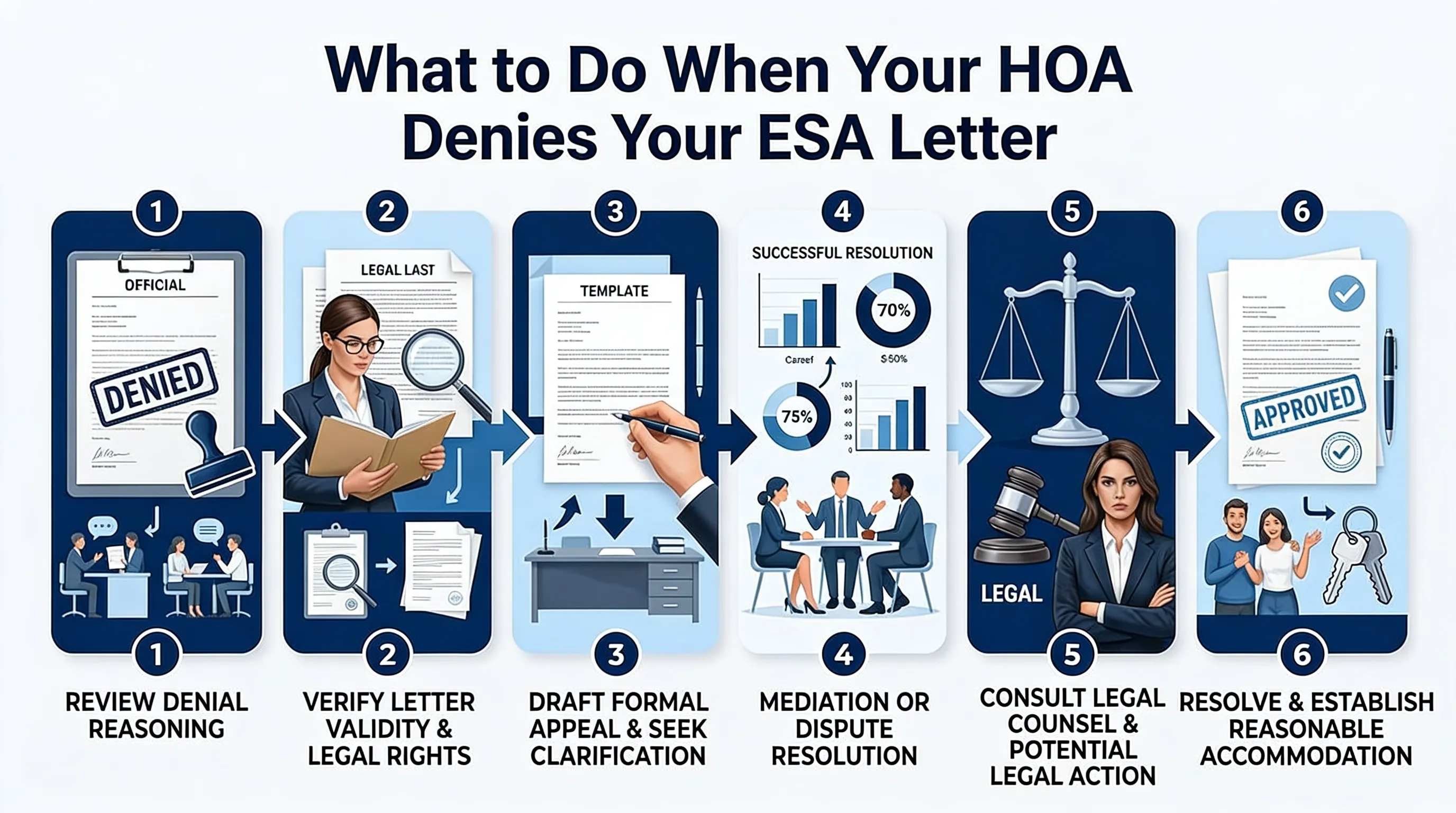
A slow answer or a denial is stressful, but you still have steps to take. Stay calm and keep every message in writing.
If the Board Stalls
Fair housing rules do not set one fixed number of days for every HOA. Still, a very long delay can count as a denial. Send a dated follow-up. Restate your request, list what you already sent, and ask for a decision by a set date. If the board asks for more information, ask what it needs and why.
If the Board Rejects It
Ask for the reasons in writing. Then compare each reason to the lists above. A denial based on breed, size, or a general no-pet rule is not the same as a denial based on a documented incident with your animal.
Reply in writing and answer each reason. Attach anything that addresses a real concern. If the board has a hearing or appeal process, ask to use it. You can also offer reasonable conduct terms that apply to all animals, such as leash use in common areas and prompt cleanup.
When to Escalate
If the board keeps refusing or retaliates, you can file a complaint with your state or local fair housing agency. You can also file with HUD. In May 2026, HUD said it will focus its enforcement on animals trained to do disability-related tasks. It will review open emotional support animal cases one by one. Expect a HUD complaint to be harder to win than before.
You can also sue in federal or state court. The Fair Housing Act gives you two years from the act, and HUD’s memo does not remove that right. Some state laws are broader than the federal approach. A fair housing attorney can review your documents and explain your options.
No one can promise a result, so keep your records organized from the first message.
Start Your Request
An ESA letter for HOA requests supports your case, but it is not a pass.
The HOA can verify the letter, yet it cannot demand your diagnosis or charge fees. Keep written records of every message and reply.
If you do not have a letter yet, a licensed therapist can evaluate your situation and decide whether one is appropriate.






 Ask ChatGPT
 Ask Claude
 Ask Perplexity