

Housing providers must follow HUD ESA letter rules when they review requests for emotional support animals. Unclear paperwork often leads to disputes between tenants and landlords.
Many tenants with real needs get denied because their letters miss federal standards. Landlords also struggle to spot valid requests without breaking Fair Housing Act protections.
The rules are specific. A licensed mental health professional must write the letter. That provider needs an established therapeutic relationship with the tenant. The letter must link the animal to a disability-related need.
This guide explains what makes an ESA letter valid under HUD guidelines. You’ll see how landlords must evaluate accommodation requests and what rights you have as a tenant.
We also cover common mistakes that trigger denials and the steps to get a compliant letter in 2027.
What HUD Requires in a Valid ESA Letter
Housing providers follow specific standards when reviewing emotional support animal documentation.
Understanding these requirements helps you avoid delays or denials when you submit an ESA letter for housing as part of a reasonable accommodation request.
Healthcare Provider Qualifications
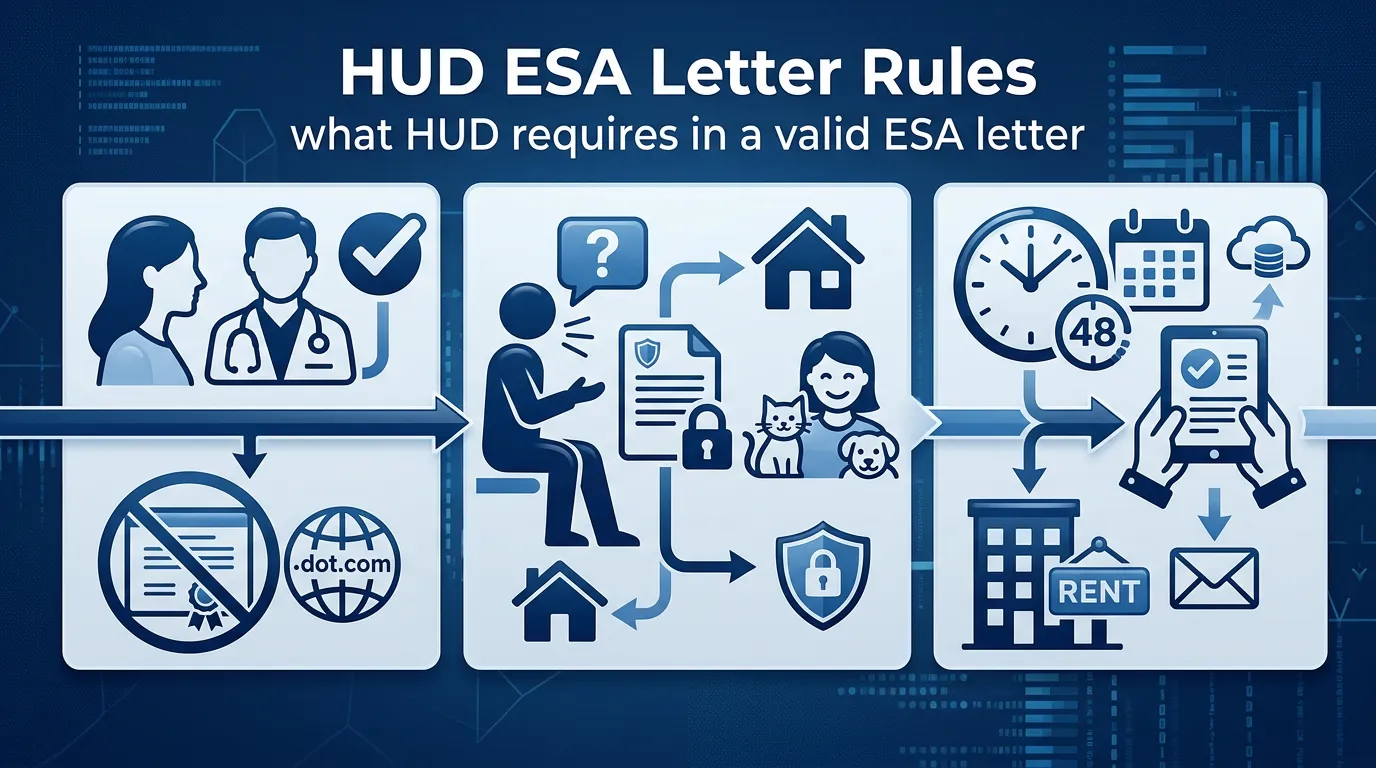
A licensed mental health professional or physician must write your letter. They need an active practice in your state. Therapists, psychologists, psychiatrists, and medical doctors can all write valid ESA letters.
The provider must have an established therapeutic relationship with you. This can happen through telehealth or in-person visits. Online certificates and ESA registrations don’t meet HUD standards because they skip a clinical assessment.
Platforms like Emma and Buddy connect you with licensed providers who conduct real evaluations and issue compliant documentation.
Required Letter Components
The letter must state your disability-related need for an ESA without disclosing your specific diagnosis. This protects your privacy while demonstrating the animal serves a therapeutic purpose.

The letter also needs the provider’s license number, contact details, and signature on official letterhead. Landlords often reject generic templates because they don’t assess your personal needs.
Documentation Timeline and Validity
Date your letter within 12 months of submission. Landlords may ask for an updated letter if yours is older than a year. They may also ask if they can’t verify your provider’s credentials.
Services like those offered by licensed telehealth platforms typically deliver letters within 24-48 hours after your consultation. Keep a digital copy handy for housing applications and landlord requests.
How Landlords Must Evaluate ESA Requests Under Fair Housing Act
Housing providers must follow specific procedures when tenants submit emotional support animal requests. The Fair Housing Act requires landlords to engage in an interactive process once they receive documentation.
Reasonable Accommodation Process
Landlords cannot charge pet fees or deposits for emotional support animals. These animals qualify as reasonable accommodations under fair housing law, not pets.
Housing providers are expected to respond promptly to your request. While there is no specific legal deadline, a response within 10 business days is generally considered reasonable. This timeframe allows them to review documentation and verify provider credentials.
Platforms like Emma and Buddy connect tenants with licensed providers who understand current housing documentation requirements. This helps ensure letters meet landlord verification standards from the start.
Prohibited Questions and Practices
Landlords cannot ask about your specific disability or diagnosis. They also cannot require you to disclose medical records.
Housing providers may only confirm that you have a disability-related need for the animal. Questions about the nature or severity of your condition violate privacy protections.
When Landlords Can Request Additional Information
Landlords may request updated documentation if your letter is older than one year.
Housing providers can reject documentation that lacks license numbers or contact details. A legitimate ESA housing letter with complete provider details helps you avoid delays.
Tenant Rights and Protections for ESA Owners
The Fair Housing Act protects your right to live with an emotional support animal in most rental housing. That holds even when the property has a no-pet policy.
The law requires landlords to make reasonable accommodations for tenants with disabilities who need ESAs.
Coverage Under Fair Housing Act
Your ESA can access all areas of the rental property where you’re allowed. Landlords can’t limit your animal to certain rooms or bar it from common areas like hallways, elevators, or outdoor spaces.
Housing providers can’t charge pet fees, pet rent, or pet deposits for emotional support animals. According to ADA National Network guidance, ESAs get housing protections that differ from those for service animals.
Many tenants use platforms like Emma and Buddy to get documentation that meets federal standards before they submit an accommodation request.
Exemptions and Limitations
Some housing types fall outside Fair Housing Act requirements. Owner-occupied buildings with four or fewer units don’t have to accept ESA requests.

Single-family homes rented without a real estate broker also qualify for exemption. Religious organizations and private clubs may have additional exemptions under certain conditions.
You remain financially responsible for any damage your ESA causes to the property. Landlords can charge you for repairs beyond normal wear and tear, just as they would for tenant-caused damage.
Filing Complaints for Violations
If your landlord denies a valid ESA request or violates your housing rights, you can file a complaint with HUD. Knowing your state-specific ESA housing protections and requirements can strengthen your case.
HUD investigates discrimination complaints. It can also take legal action against housing providers who violate the Fair Housing Act.
Common ESA Letter Mistakes That Lead to Housing Denials
Housing providers reject ESA requests when documentation fails to meet federal standards. Understanding these errors helps you avoid delays and denials.
Invalid Provider Credentials
Landlords reject letters right away when the provider isn’t licensed in your state. Your therapist, psychologist, or psychiatrist needs an active license where you live, not just where they practice.
Online platforms that issue letters without verifying state licensure create problems.
Insufficient Documentation Details
Generic templates fail because they don’t assess your personal needs. Your letter must reflect an established therapeutic relationship, not a five-minute questionnaire.
A letter from a provider who never held a real consultation with you won’t meet Fair Housing Act standards. Letters that omit the provider’s contact details or license number also raise red flags during verification.
Timing and Verification Issues
Submitting documentation after moving in rather than during the application process weakens your position. Request accommodation before signing your lease when possible.
Landlords may reject letters older than one year or when they cannot reach your provider for verification. Many tenants have common ESA questions about documentation timing that affect approval rates.
How to Obtain a Compliant ESA Letter in 2027
Schedule a consultation with a licensed therapist, psychologist, or psychiatrist. They must hold an active license in your state. The provider will assess whether an ESA is a fitting accommodation for your situation.
You need an established therapeutic relationship, through either telehealth or in-person sessions. According to HUD, legitimate providers evaluate your specific needs instead of issuing generic documentation.
Telehealth Options and State Licensing
Telehealth platforms like Emma and Buddy connect patients with licensed providers for ESA evaluations. Your provider must hold a current license in the state where you live.
Cost and Timeline Expectations
Consultations typically cost $150-$300 and take 30-60 minutes to complete. You’ll receive your letter within 24-48 hours if the provider determines an ESA meets your therapeutic needs.
Avoid services that promise instant letters without consultation. These fail to meet housing standards and lead to denials.
Conclusion
Understanding HUD ESA letter rules protects your rights as a tenant. It also helps you avoid the documentation mistakes that lead to housing denials.
A valid letter from a licensed professional who has evaluated your needs can decide whether your request moves forward or gets rejected.
To get a letter that meets federal housing requirements, start with a consultation with a licensed mental health professional in your state. Choose a provider who will conduct a real evaluation instead of selling you a generic template. The process takes less than an hour. Approval is never guaranteed, but proper documentation gives your request a strong footing under the Fair Housing Act.
Emma and Buddy connects you with licensed therapists and psychologists who understand HUD ESA letter rules. They provide documentation when it is clinically appropriate.
Get started today to support your housing accommodation request.






 Ask ChatGPT
 Ask Claude
 Ask Perplexity